



Will conflict continue as Iraq's Sunni areas are liberated from IS?
A new type of conflict may arise in Iraqi areas recently liberated from the Islamic State as different Sunni forces compete to regain political and economic control.
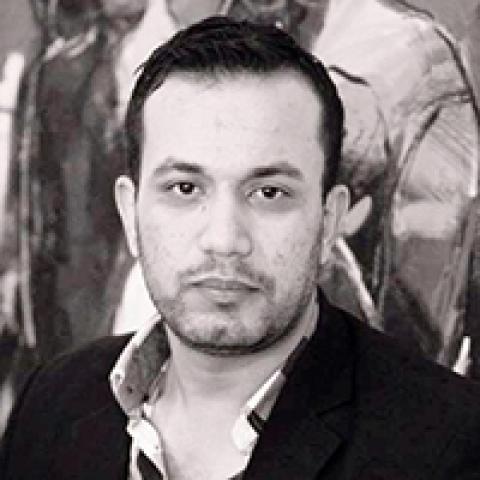

BAGHDAD — On June 28, the Anbar provincial council voted to dismiss Gov. Suhaib al-Rawi, who is a member of the Iraqi Islamic Party. While the dismissal came as a result of a political conflict within the province, Rawi said he "rejects the decision of his dismissal" as he threatened to "resort to both the law and the judiciary to challenge the Anbar council's vote."
Meanwhile, the Iraqi Islamic Party, headed by former Speaker Ayad al-Samarrai, is trying to restore its presence and regain control over Sunni areas by trying to control the Anbar reconstruction dossier.
For his part, the head of the Sunni Endowment, Diwan Abdul Latif Al-Hamim, who joined the dispute over Sunni areas, is trying to stop the expansion of the Iraqi Islamic Party as he continues to expand his influence there. Al-Masalla website published a report in May showing that each of the aforementioned parties are exploiting their influence on Sunni tribal forces to expand their dominance in Anbar province. Hamim had used the humanitarian crisis plaguing the Sunni province in his favor. However, he is facing major obstacles that have led to a conflict with the Iraqi Islamic Party, as revealed by the leader of the Iraqi Front for National Dialogue, Saleh al-Mutlaq.
Therefore, one can say that the Sunni community in Iraq is becoming disunited, given the multiplicity and dispersion of its political and religious leaders. Also, Sunnis need religious and political figures who can unite them, and this is depriving them of an identity that could influence political elites. Despite this dire need, Rawi's supporters handed a request to the Iraqi parliament on July 4 to divide Anbar province into two parts; this would create western Anbar as a new province, where he would be able to remain governor.


