



Start studying, it takes more than just good looks to be a model in Iran
The Iranian authorities are set to regulate the country's nascent modeling industry.
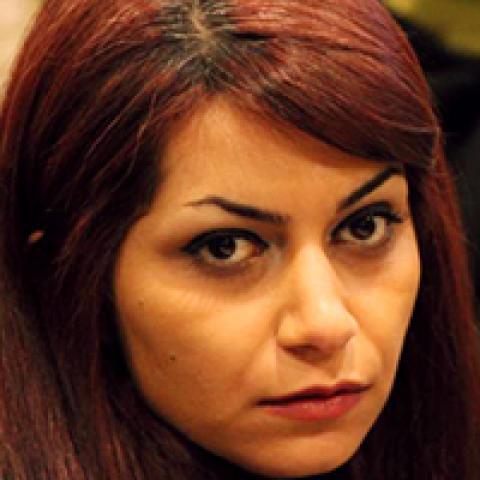

Iranian models first came to life underground, took their first steps on social media and now, under the administration of President Hassan Rouhani, are finally set to go mainstream through new “qualification cards.”
To receive these cards, which are issued by the Ministry of Culture and Islamic Guidance’s Fashion and Clothing Regulation Workgroup, aspiring models have to undergo 65 hours of training and take part in certain examinations. They are trained on issues related to “religious teachings, technical methods for displaying/presenting a product without adornment or showing off and analyzing international research on modeling.” If they pass exams on the latter, they also have to be approved in terms of their moral and legal standing. Those who receive a qualification card will come under the workgroup’s oversight and join the exclusive club of people allowed to work in Iran’s legal modeling industry. The types of activities they can engage in include live shows, being photographed for magazines and participating in television advertisements.
On March 16, 2014, the closing ceremonies of the third Fajr Fashion and Clothing Festival took place in Tehran’s famous Vahdat Hall in the presence of Minister of Culture and Islamic Guidance Ali Jannati and other government officials as well as domestic and foreign journalists. As traditional Iranian music played in the background, a number of select female models marched on the stage, some solo, some in pairs and, in the end, all together in one big group. There was nothing like a catwalk in sight. The models simply walked onto the stage in a normal and calm manner, and when they reached the front, paused a few seconds before leaving the stage. Their clothing, which fully covered their bodies, incorporated Iran’s religious and traditional heritage. Later, male models came onstage to display leather clothing. They, too, walked very calmly to the front, where they made two or three short pauses before exiting the scene.
These individuals, who were all approved by the Ministry of Culture and Islamic Guidance, succeeded in putting on Iran’s first official live fashion show since the 1979 Islamic Revolution. The event was organized by the Behpooshi Modeling Agency, one of four authorized modeling agencies in Iran. Majid Ansari, an Iranian model with 14 years of experience in Dubai, Turkey and Iran, told Al-Monitor, “I have had many live fashion shows abroad, but I must say that when I received a permit for a catwalk at Vahdat Hall, Iran’s top arts venue, I was extremely happy. This was the most enjoyable show of my life.” Ansari began his modeling career in 2003, with the permission of the Ministry of Culture and Islamic Guidance. Just over a decade later, he was the lead model to take the stage at the closing ceremonies of the third Fajr Fashion and Clothing Festival.


