



Will Israel's force-feeding law turn doctors into political tools?
The controversial force-feeding law passed in July will soon be tested by the case of hunger-striking Palestinian prisoner Mohammed Allan as the Israel Medical Association stands firm against a practice it considers unethical.
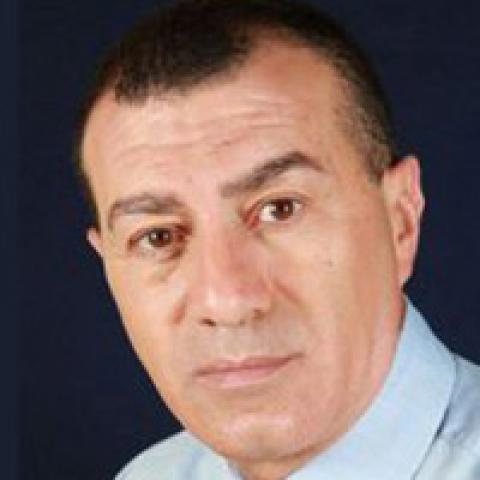

Mohammed Allan, the administrative detainee who has been on hunger strike for 57 straight days now, is testing the new force-feeding law passed by the Knesset on July 30 just before breaking for summer recess. Allan was hospitalized in critical condition at Soroka Medical Center in the southern city of Beersheba and on Aug. 10 was transferred to Barzilai Medical Center in the town of Ashkelon. In the three weeks since his transfer to the hospital, he has been under the supervision of senior physicians there. After the Knesset passed the bill, his doctors — under advisement from the Israel Medical Association — decided that they would not be used as political pawns and would not force-feed him. As far as they’re concerned, the Hippocratic Oath overrides the controversial law.
Two days after the Knesset passed the law, Dr. Tamar Karni, chairman of the IMA’s ethics committee, showed up at the Soroka ward in support of its physicians, who are complying with Allan’s wish not to be fed under any circumstances as long as he is conscious and refuses to eat of his own free will. Karni told Al-Monitor that the state has pressured the doctors, expecting them to do its job.
According to her, the new legislation is an attempt to shift the pressure surrounding the sensitive issue of administrative detainees to physicians. “It hurts me that they put us by force on the spot,” she said. “All the other courts — the political, diplomatic and legal ones — are now straddling the line, trying to turn doctors into either collaborators or criminals.”
During her visit to the intensive care unit, Karni tried to persuade Allan to accept palliative care, which by her definition does not compromise his hunger strike. “So far, all the administrative detainees, except Khader Adnan [recently released from prison after 54 days of hunger strike], agreed to accept saline intravenous infusion with vitamin injections to prolong their life,” she said. “Similarly to Adnan, Allan has refused to accept this palliative care.”


