



Al-Qaeda theorist calls for infiltrating political systems
Abdullah bin Mohammed, an al-Qaeda theorist, believes jihadists need to adopt a new strategy of attaining legitimacy by rebranding themselves and working from within political systems, an idea that might already have taken root in Syria.
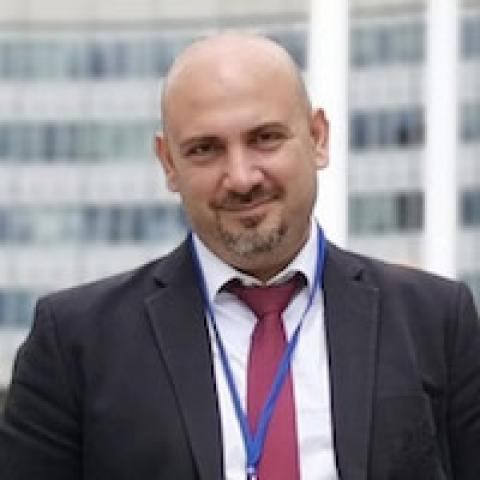

As radical Islamic groups continue to pursue the imposition of their ideologies and grab for power around the Middle East and North Africa, a prominent al-Qaeda ideologue has called on groups working within the framework of the infamous radical group to adopt a new strategy to infiltrate legitimate regimes in the region and build their influence and power from within. The logic is that this approach will allow them to better establish a lasting presence and implement their vision. Abdullah bin Mohammed has written several articles on al-Qaeda's strategies and conducted research on jihad in the region. Among his works is “Strategic Diaries,” available online, and “The Strategy of the Regional War in Syria.” His Twitter account, “Strategic Affairs,” has attracted some 242,000 followers.
Mohammed, an al-Qaeda member, is the ideologue representing a new path for the movement, not just a different current. Marwan Chehadeh, an expert on islamists groups, told Al-Monitor, “Mohammed is an expert on security and military affairs. I believe he’s from the Arabian Peninsula and introduced some new concepts, including political guerrilla wars. Mohammed calls for changing thinking about ruling in Islam. He is against jihadi emirates.”
Mohammed believes the outcome of the jihadi effort of the last three decades justifies a change in strategy. In his article “Political Guerrilla Wars,” he wrote, “The jihadi group’s main problem isn’t finding a way to fight the international system, as al-Qaeda provided an answer to this issue. The main problem is how to be able to rule under such a system. This needs political guerrilla war.” He clarified his thinking, stating, “The military calculations proved to us that an open confrontation with a strong enemy like the US is military suicide. Therefore we had to go a different way in military confrontation, and in politics an open confrontation like declaring a state is also political suicide, as the West has the power to weaken us, pressure our societies and at the end uproot us as they did in Afghanistan and Iraq. Therefore, we have to build a new strategy that can enhance our resilience.”
Mohammed cited the al-Qaeda-affiliated Libyan Islamic Fighting Group as an example, explaining that it was able to build solid alliances with other Islamic and revolutionary groups and was flexible toward the outside world. “They issued a fatwa that allowed them to participate in the democratic regime after they demanded that Sharia be a main source of legislation. Next they will start working on building their Islamic regime,” he said, also using images to denounce the tendency of some groups toward beheadings, which he said gives the West a pretext to intervene militarily.


