



Islamic feminist challenges orthodoxy from within
Turkish academic Hidayet Tuksal has made a reputation as an Islamist feminist, studying religious texts and challenging Islamist notions that marginalize women.
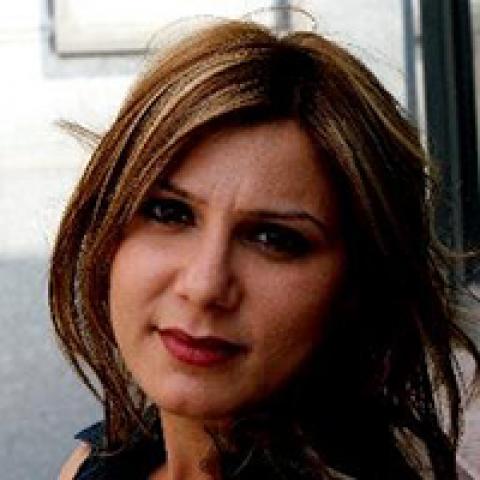

Turkish theologian Hidayet Tuksal, known as an Islamist feminist, is the author of academic studies questioning Islamic narratives about women, including notions such as Eve’s creation from Adam’s rib and the devil following women. While working on a doctoral thesis, she discovered how sexist and misogynistic mentalities shaped religious texts, doctrines and Islamic scholars. She is alarmed that the same mentality continues today.
Tuksal studied theology and is today a lecturer in the same realm at Artuklu University in the southeastern city of Mardin. She wears the Islamic headscarf, which makes her a conservative Muslim. Yet, she has another prominent feature — she holds feminist views. With her outspoken feminist attitude on women’s place in Islam, she has become a well-known figure in Turkey whose views often generate debate.
Born to a family of Muslim immigrants from the Balkans, Tuksal said she was raised in a Balkan culture in which Islam was “a constituent element of one’s identity.” She had a deeply religious mother as a role model. Her enrollment in a theology faculty in 1980 was the result of a combination of pressures. Turkish universities at the time were at the center of bloody clashes between rightist and leftist militants, which led to a military coup the same year. So, Tuksal’s father put a condition, saying, “The theology faculties are the only place free from clashes, I’m not sending you anywhere else.”
During her university years, Tuksal attended the meetings of various groups and joined a religious order, striving to adhere strictly to Islamic teachings. Yet, she also read a lot and sought to explore different points of view. “As my knowledge grew, I began to see that religious doctrine had developed largely on the basis of human interpretations. Hence, I realized I could well have my own interpretations regarding religious doctrine. That was the point of freedom, even if partial, for me,” she said.


