



Will Herzog compromise party values to join government?
According to his own statements, his openness to the establishment of a Palestinian state based on the 1967 borders threatens to prevent Zionist Camp leader Isaac Herzog from joining a Likud-led government after the elections.
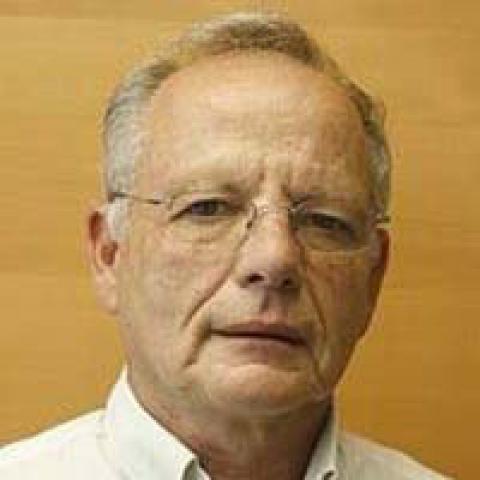

As the date of the Knesset elections draws near, Israelis are setting aside the debate over the country’s future and instead trying to put together the pieces of the puzzle that could form the next coalition government in various configurations. The leading scenario seems to be a national unity government with the Likud, the Zionist Camp and Kulanu, with or without Yesh Atid, with or without a rotating premiership between party leaders Prime Minister Benjamin Netanyahu and the Zionist Camp's Isaac Herzog.
Senior Zionist Camp representatives and veteran commentators note that chairs who relegated the party to the opposition benches in previous elections did not last long. Therefore, they are willing to bet that to be named prime minister, if only on a rotating basis with Netanyahu, Herzog will be willing to make significant concessions. Some even surmise that he would make do with the foreign minister’s portfolio to avoid having to continue in his current position as opposition leader.
The tie between the big blocs may, indeed, force Netanyahu and Herzog to distance themselves from the positions they took on the eve of the elections and move toward ones that will enable the formation of a stable, functioning government. But such steps, too, must have a red line, and it has to be the Green Line — the only point of origin for any negotiations with the Palestinians, under the auspices of the Arab League and the international community, over the establishment of a Palestinian state alongside the State of Israel.
The policies adopted by Netanyahu’s recent governments and the views of Herzog and his friends in the Zionist Camp are far apart. A pamphlet distributed in synagogues in February clearly illustrates this tremendous gap. Referring to Netanyahu’s 2009 Bar-Ilan University speech, it says, “The prime minister announced to the public that the Bar-Ilan speech is null and void. Netanyahu’s entire political biography centers on the struggle against the creation of a Palestinian state.”


