



Israeli Arab party poised to reshape country's politics
Many Israeli Arabs believe that the unification of the Arab parties into one joint list and the momentum this move has generated will be translated into high voter turnout in the Arab sector and real change.
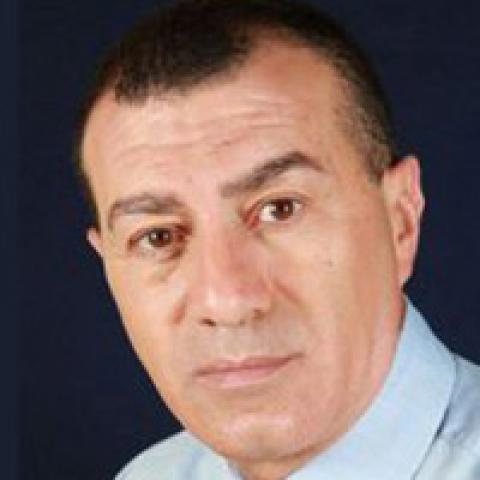

No one who has toured the Arab communities in recent days needs to wait for the exit polls to realize that a clear-cut and historic turnabout has taken place in this Israeli election, at least among the Arab sector. It is poised to rock and reshape Israel's political map.
As of the time of writing (March 16), one day before the general elections, it remains uncertain whether the predominantly Arab Joint List will indeed become the third-largest party in the new Knesset, as the polls predict. However, there isn't a shadow of doubt that the whole Joint List is greater than the sum of its parts. The unification of the Arab slates has been conducive to a political momentum the likes of which the Arab sector cannot recall. The circumstances that brought about the unification also catalyzed the Arab population to do away with their boycott of the Israeli elections since the events of October 2000.
During the previous elections in January 2013, I made a similar visit to Umm al-Fahm and the communities of the Triangle, and wrote about their frustration and disappointment in the Israeli political system that left many Arab voters at home. Now this avoidance seems to be a thing of the past. Although only two years have passed since those elections, it nonetheless feels like a generation has elapsed.
In Umm al-Fahm, Arraba, Musmus and Baqa al-Gharbiyye, everyone is convinced that once the final tallies are in, the pollsters will be surprised by the high number of seats that the Joint List will have won and the high voting rate in the Arab sector. Many talk about a turnout similar to the Jewish one. Others go even further, suggesting that given the current circumstances, Arab turnout is going to be even higher.


