



Russia and the Kurds
Russia balances its relationships with various Kurdish groups with its support for the states the Kurds live under.
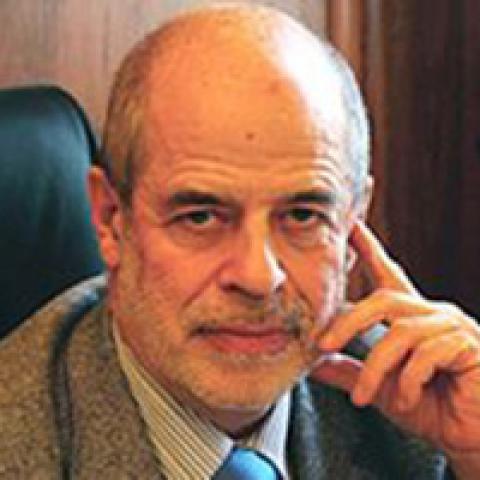

The Kurds’ growing role in the evolving and turbulent situation prevailing in the Middle East and elsewhere affects the policies of regional and global powers alike. Russia is no exception. In recent years, Moscow has taken steps to develop contacts with Kurdish political movements and establish economic cooperation with Iraqi Kurdistan, where Russian oil and gas companies have set up shop. The February 2013 visit to Russia by Kurdistan Regional Government President Massoud Barzani, dubbed by the Kurdish people as the “first official visit,” served as a significant milestone in the development of political contacts. The visit refreshed the memories of developments dating back more than half a century when the Kurds’ historical leader (and Barzani’s father) Mullah Mustafa Barzani lived in the Soviet Union from 1947 to 1958, where he enjoyed support on a number of fronts.
Another recent visit by a Kurdish politician was also a first, as Selahattin Demirtas, chairman of Turkey’s People's Democracy Party (HDP), visited Moscow in December 2014. One would think there was nothing unusual about the visit, with Demirtas at the helm of a lawful Turkish party and, on top of that, having recently run for the Turkish Republic’s presidency in the latest election and having won a tenth of the votes cast. However, there was a certain sensitivity given that Demirtas is opposed to the current authorities while Moscow maintains an unprecedentedly close relationship with the Turkish government. As noted by Demirtas himself, his party seeks to overcome a lack of communications with Russia, as “Russia's policies vis-a-vis the Kurds suffer from Cold War reflexes and are somewhat at odds with reality.”
It is then no wonder that the HDP leader, who considers protection of Kurdish rights a priority goal and, therefore, a topic for discussion in Russia, nevertheless has invariably sought to dispel the slightest suspicion of separatism and positioned himself as a proper Turkish politician during the visit. According to him, the Kurdish factor in the Russian-Turkish relationship, in fact, is being “relegated to a secondary position.” He said in a recent interview, “We would like to discuss the Kurdish issue in the context of the Russian-Turkish relationship without creating any problems for the relationship. However, the matters of democracy and free rights for the Kurds must be resolved.”
In his interactions with Russian political and public figures and entities (including the Oriental Studies Institute of the Russian Academy of Sciences), Demirtas also emphasized that the HDP was a "social party." It is an accident that, while at the State Duma, the lower chamber of the Russian parliament, he met with deputies representing the CPRF (communists) and the LDPR (Vladimir Zhirinovsky’s party). Demirtas was accompanied to the meetings by Salih Muslim, the leader of the Syrian Kurds’ Democratic Union Party (PYD) and a member of the National Coordination Body for Democratic Change.


