



Could Meretz Party amass more Arab votes?
In an interview with Al-Monitor, Knesset member Esawi Frij says that the strong tribal or family identity of Israeli Arabs will not necessarily encourage them to support the United Arab Party, opening the way to support leftist Meretz.

In the March 17 Israeli general elections, the Arab vote may, for the first time ever, have a decisive role in cobbling together the new government. The joint Arab slate, announced on Jan. 23, is expected to garner 11-13 seats, recent polls indicate, thus poised to become the fourth-largest party in the Knesset. No longer are we talking about slivers of parties but rather about a party with clout and influence, provided that its members succeed in remaining united after the elections.
But as reported on Jan. 22, quite a few traditional voters — the hard core of the Arab parties — argue that they will find it hard to vote for a joint slate pieced together from all the Arab parties. They will have a hard time voting for a slate that has no ideological outlook and that blurs the difference between the various streams in the Arab street. They believe this homogeneity to be bogus and contrived and based solely on their being Arabs. Hadash Party voters, for instance, who are basically Marxist Communists, will find it difficult to cast a vote for their opponents from the Islamic Movement or Balad (National Democratic Alliance) Party, whose members are anathema to them.
It is those lost votes that the Meretz Party, which opened its election campaign in the Arab sector in the city of Nazareth in the presence of the party Chairwoman Zahava Gal-On, will try to secure.
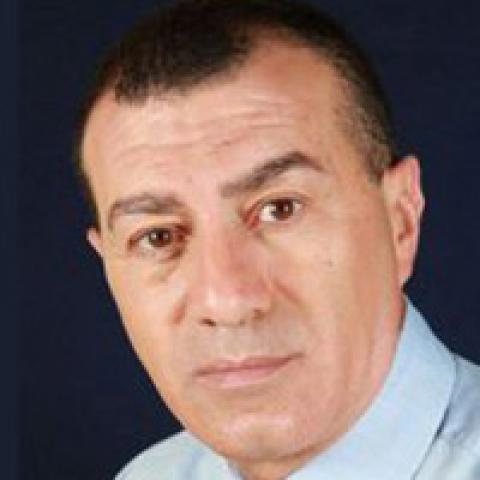
In an interview with Al-Monitor, Knesset member Esawi Frij, a Kafr Qasim resident who's ranked third in the party’s slate, opined that Meretz might be able to get one or two seats from the Arab sector, provided it invests smartly in grass-roots activity. "The biggest mistake of Israeli decision makers," he says, "is that they don’t understand something fundamental that typifies Arab Israelis. Most — if not all — of them want to be an integral part of the Israeli experience and feel like full-fledged citizens. The Arab voter is different from the Jewish voter by his national identity but not by his Israeli identity. For all intents and purposes, we are Israelis. And Israeli society should incorporate Arabs as full partners; there’s no other option. It is in the interest of the majority and not just the minority that we make our contribution to society and feel part of it. It is this message that I’m trying to convey and explain, and it attracts both interest and great support."


