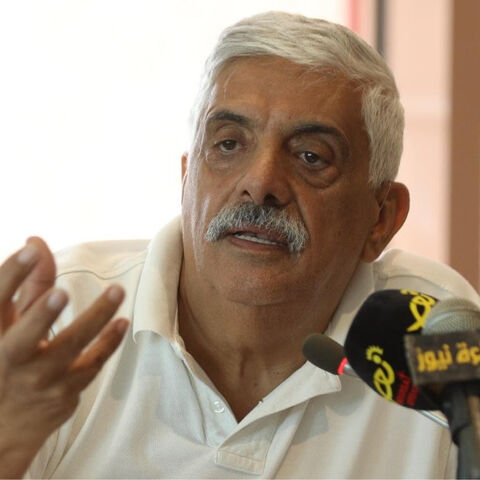
The death of senior Palestinian official Ziad Abu Ein, while he attempted to plant olive trees in Palestinian territory, is sure to reignite calls for a major discussion of Palestinian resistance tactics and strategies. Palestinian nonviolent efforts have been going on for years without producing concrete results.
At a time when negotiations had reached a dead end and armed resistance had proven extremely costly in human and other terms, an alternative strategy was sought. Palestinian President Mahmoud Abbas and others in the Palestinian national camp advocated nonviolent popular struggle as the most effective means to force Israel to end its 47-year occupation. The Israelis, who recognized how lethal responses to popular protests fueled the first intifada, have confronted the various efforts with just enough violence to try to deter, but without major fatalities.
Israel's oppressive efforts to stifle Palestinian resistance have been seen in places like Ni’llin, Nabi Musa, Nahalin and other villages where protests have been taking place every Friday for years. The demonstrations, largely against the separation wall and confiscation of Palestinian lands, have included Israeli peace supporters and international solidarity activists. Media have also had a presence, regularly filming and reporting on Israeli actions, although with time the impact of these actions diminished, in part because of the absence of fatalities. A Dec. 10 confrontation between Palestinians and Israeli forces, however, did result in a fatal injury to a senior Palestinian official.
Abu Ein had been a minister without portfolio in the Palestinian government and head of the Commission Against the Separation Wall and Settlements. Abu Ein, also a member of the Fatah Revolutionary Council (FRC), was declared dead at a Ramallah hospital after suffering serious injuries in a confrontation with Israeli troops.
AL-MONITOR All-Access gives you unlimited access to all our journalism, the full Daily Briefing, exclusive interviews, premium newsletters, and live events — for less than $2/week.