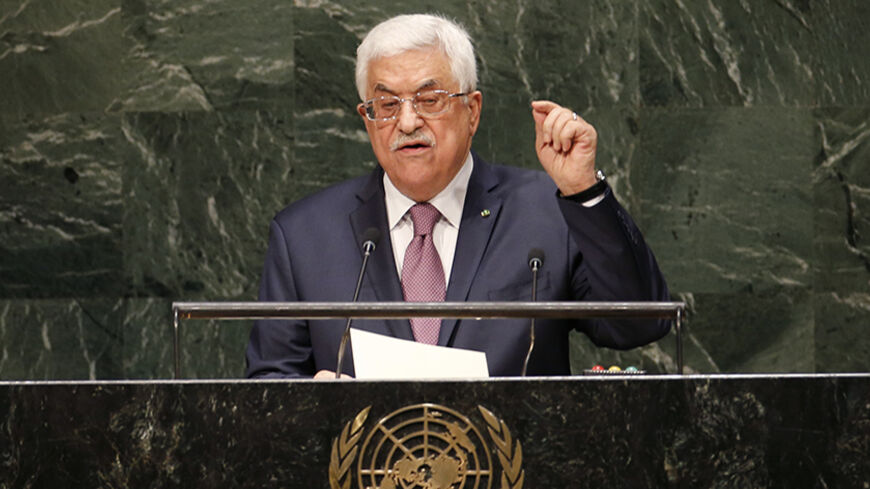
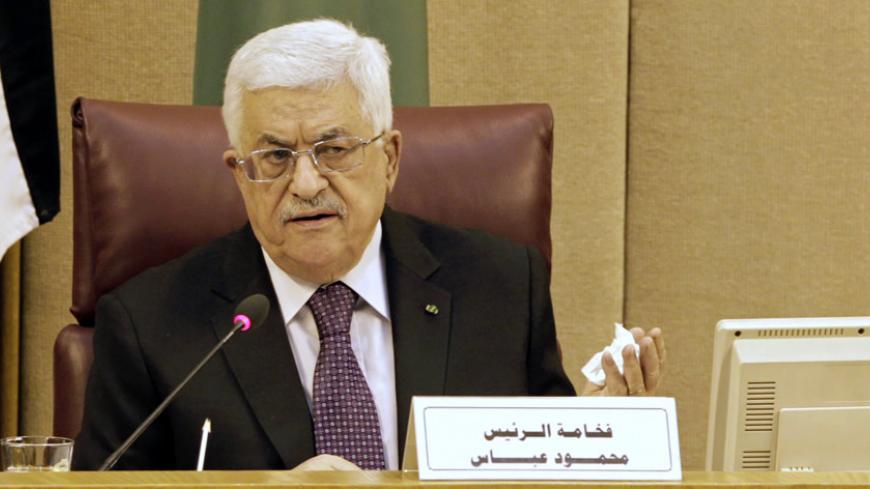
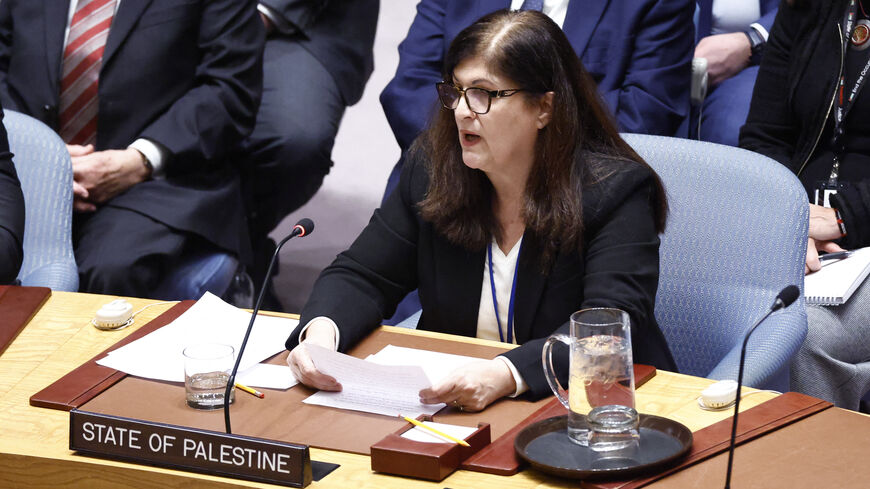
Two resolutions that on the surface appear similar have been presented to the UN Security Council on Palestinian statehood. Dina Kawar, Jordan’s UN representative, on Dec. 17 presented the Palestinian draft backed by the Arab League, while France presented what seems to be a European counter version, which has the tacit agreement of Washington. The Jordanian version will be the main focus of the discussions that will most probably begin after the Christmas and New Year’s holiday.
While in some ways the two versions are similar, a few clear differences are evident both in content and in operational language. In the preamble of the two drafts, five differences stand out.
Both drafts reaffirm the 1947 General Assembly Partition Plan, but the French version published by the Montreal-based Center for Research on Globalization clearly hints at Israeli Prime Minister Benjamin Netanyahu’s demand that Palestinians recognize Israel as a Jewish state. The French version added to the clause a line saying that the 1947 resolution recommendation on the question of Palestine was for the establishment of “the independence of the Arab and Jewish States.” In the paragraph on Gaza of the preamble, both versions call for a “sustainable solution to the situation in the Gaza Strip.” However, the French omitted the word "Palestinian" from the segment about the origins of Gaza, while the Jordanian version states that “the Gaza Strip constitutes an integral part of the Palestinian territory occupied in 1967.” The French also dropped the term "internationally" when reaffirming the rights of all states in the region to “live in peace within secure and internationally recognized borders.” And while the Arab version praised the United States for its efforts in 2013-14 to “facilitate and advance negotiations between the parties aimed at achieving a final peace settlement, the French version drops the word "peace," stating simply that the US aim was to “take forward negotiations aimed at final settlement.”
While the variations in the preamble are important, major differences occurred in the operating section of the two drafts. The Jordanian version suggests “no later than 12 months” of negotiations, while the French version doubles the period to 24 months.
AL-MONITOR All-Access gives you unlimited access to all our journalism, the full Daily Briefing, exclusive interviews, premium newsletters, and live events — for less than $2/week.