



Secular Turkey to build an 'International Islamic University'
Turkey’s International Islamic University could be a meaningful contribution to the Islamic world, but only if it is not dominated by the ultra-conservative school of jurisprudence and theology.
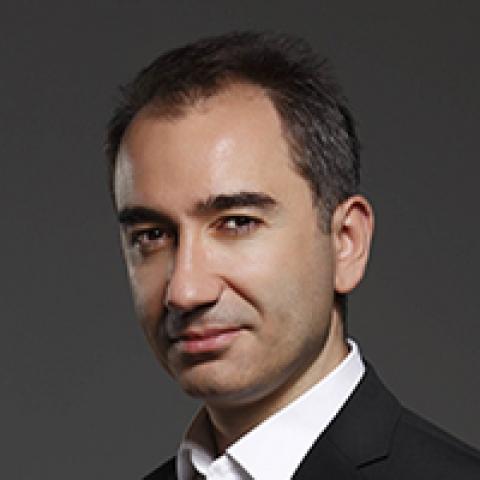

Turkey’s top cleric, Mehmet Gormez, the head of the Directorate of Religious Affairs (DRA), unveiled a new project earlier this week while speaking to a group of Turkish journalists. Turkey will soon have an “International Islamic University,” Gormez said, adding that Islamic universities in Egypt, Pakistan, Iran and Malaysia were “unable to find solutions to problems in the world.” By that comment, he implicitly signaled that Turkey is getting ready to make bolder claims in the Islamic market of ideas.
First, a few observations: Gormez’s remarks came in Mecca, where he was heading the Turkish delegation for the hajj, or the Islamic pilgrimage. Moreover, Gormez had also criticized Saudi authorities during the same trip, blaming them for “destroying history” by building huge skyscrapers that overshadow the Kaaba. This was, besides being a personal remark, an objection by the history-sensitive “Turkish Islam” to the literalist “Saudi Islam.”
Second, the institution that Gormez heads, the DRA — a peculiar quasi-ministry of religion in a supposedly secular Turkey — would never be able to make statements about education before the era of the incumbent Justice and Development Party (AKP), i.e., the era from 2002 to today. Before then, Turkish education, like other “strategic” issues, was under the thumb of hard-core secularist generals. So, neither an “International Islamic University” would be allowed, nor would the DRA be active in its formation.
Yet, in the AKP’s “New Turkey” many taboos have been broken and new patterns are emerging. The state’s support for religious education — such as “Imam Hatip” schools, or high schools with a quasi-religious curriculum — has dramatically increased. Meanwhile, theology faculties that existed during the pre-AKP era but which were marginal have gained more state support, funding and prestige.


