



Israel should protect 'old front' with Jordan
To maintain the special Israeli-Jordanian ties, Israel should be sensitive to the internal pressures facing the Hashemite kingdom and promote a real diplomatic process with the Palestinians.
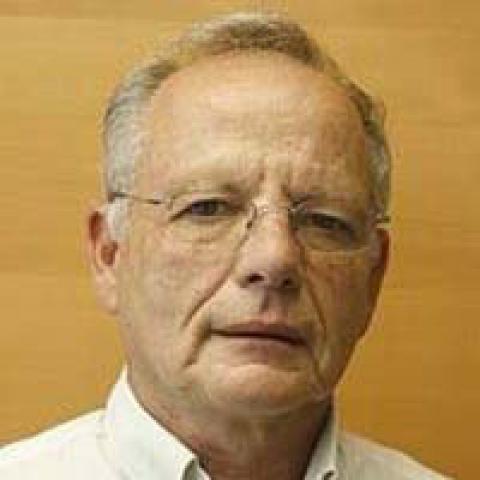

Israeli Defense Minister Moshe Ya’alon explained at length on the Oct. 20 edition of the US Public Broadcasting Service's "Charlie Rose" show why Israel does not have a Palestinian partner for a two-state solution. He suggested that the Palestinians set aside their aspirations for a state (“they have political independence”) and make do with autonomy, without annexed East Jerusalem and without Area C, which covers 60% of the West Bank.
The interviewer sought to understand how the position of the senior Israeli minister can be reconciled with statements emanating from Jerusalem about “new opportunities” that have opened up for Israel in the Middle East following Operation Protective Edge and the fight against the Islamic State (IS). How does distancing oneself from ending the conflict with the Arabs and Palestinians fit in with drawing closer to the Arab world in the Middle East? Ya’alon referred Rose to the speech delivered by Prime Minister Benjamin Netanyahu regarding diplomatic horizons, added something of his own regarding Israel’s desire for “partnership with the Arab world” and ended with, “We know how to take advantage of opportunities and to cooperate with those who are interested in doing so.”
An event that took place on Oct. 26 illustrates the link between perpetuating the occupation in the territories and regional opportunities. It also shows how disconnected the Netanyahu-Ya’alon government is from reality. At a Rabin Center event marking the 20th anniversary of peace with Jordan, the defense minister sat next to Jordan’s ambassador to Israel, Walid Obeidat, the only Arab ambassador posted in Israel. (Egypt has been represented for the past two years by a charge d’affaires.) An announcement issued by the Obeidat tribe on the occasion of Obeidat’s appointment as ambassador in September 2012, said, “Anyone accepting this post puts his hand in the hands of those who have worked to rob the land and kill and uproot Palestinians, … violating all prohibitions, crossing all red lines.”
Jordan has officially cut itself off from negotiations between Israel and the Palestinians, but the dominant Palestinian presence in the kingdom continues to connect between the Jordanian people and the occupied territories. King Hussein passed on this hot potato to Israel and the PLO, but the royal family did not give up Jerusalem and the holy Muslim sites. In an interview I conducted with him in October 2009 on the 15th anniversary of the peace between Jordan and Israel, the Jordanian monarch stressed that the agreement was signed as part of a process intended to achieve a comprehensive peace. He said the agreement provides his country with a special role in Jerusalem. And indeed, Israel has committed as part of the agreement to respect the present special role of the Hashemite Kingdom of Jordan in the Muslim holy shrines in Jerusalem.


