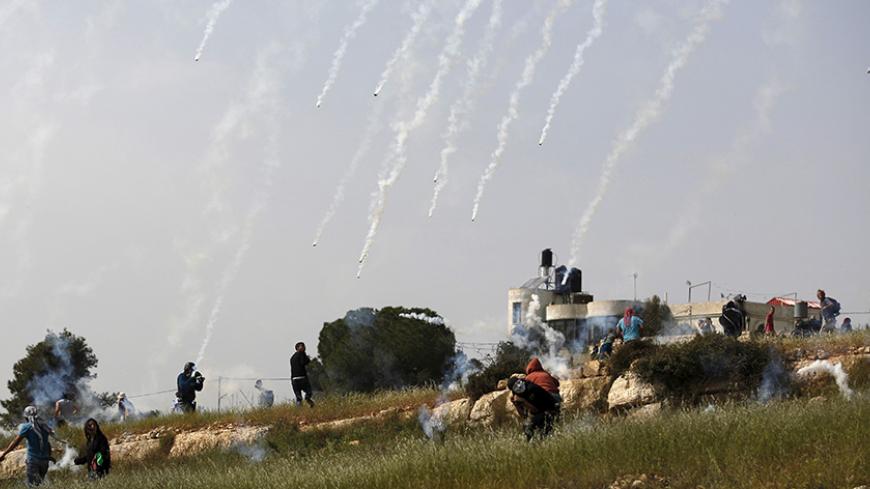
It might seem counterintuitive, but the current Palestinian-Israeli hostility is a healthy return to what relations between occupiers and the occupied should be. Thus far, it is largely a rhetorical escalation in hostilities, but such words often quickly become action.
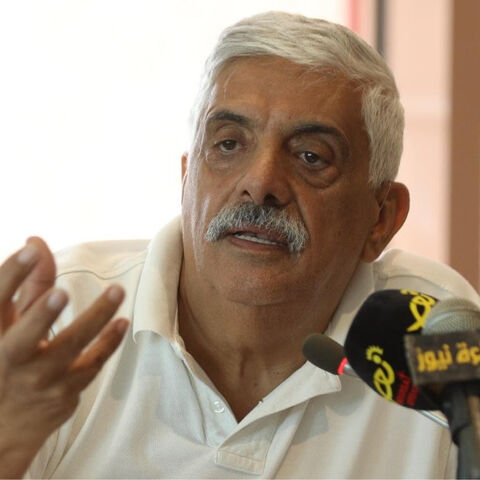
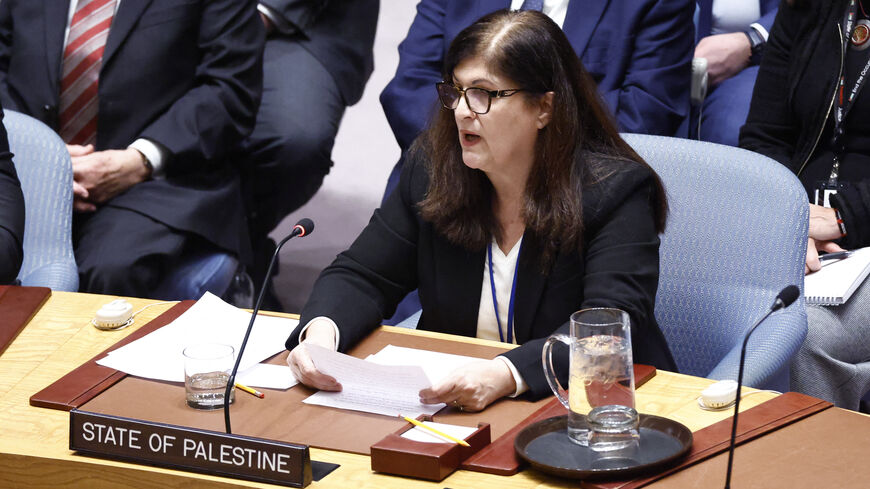
In this war of words, Palestinian President Mahmoud Abbas, speaking before the UN General Assembly, called Israeli actions in Gaza this summer a “genocidal crime.” This was in turn rebuked as “slander and lies” by Israeli Prime Minister Benjamin Netanyahu, who responded from the same UN podium with accusations that the Palestinian resistance is a carbon copy of the Islamic State extremists in Iraq and Syria. Another round in the war involved statements by chief Palestinian negotiator Saeb Erekat comparing Netanyahu to Abu Bakr al-Baghdadi, the extremist, self-appointed caliph of the so-called Islamic State.
To be accurate, these words have not been entirely without action. Israel continued to confiscate Palestinian lands in the West Bank, including East Jerusalem, prompting PLO official Hanan Ashrawi to say that Israel is “committed more to land theft than to peacemaking.”
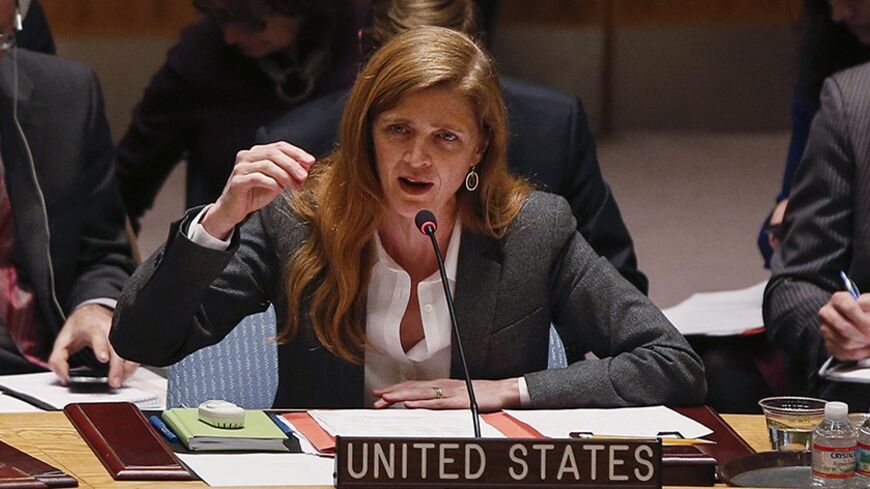
The Palestinian side has yet to publicly threaten to go to the International Criminal Court (ICC) if its current efforts at recognition of a Palestinian state at the UN Security Council end with a US veto. The Palestinian delegation was said to have been divided on the issue in regard to the UN speech, and Abbas chose in the end not to mention the ICC to avoid angering the United States, which appears to have threatened to cut off $700 million in aid to the Palestinians. The Gaza reconstruction conference, scheduled to be held this month in Cairo, also seems to have played into Abbas’ decision.
AL-MONITOR All-Access gives you unlimited access to all our journalism, the full Daily Briefing, exclusive interviews, premium newsletters, and live events — for less than $2/week.