



Zahar, Haniyeh pressured Meshaal into cease-fire
The cease-fire between Israel and Hamas signals the opening of a great battle over the movement's leadership, between Hamas political bureau chief Khaled Meshaal in Qatar and Gaza leaders such as Mahmoud al-Zahar.
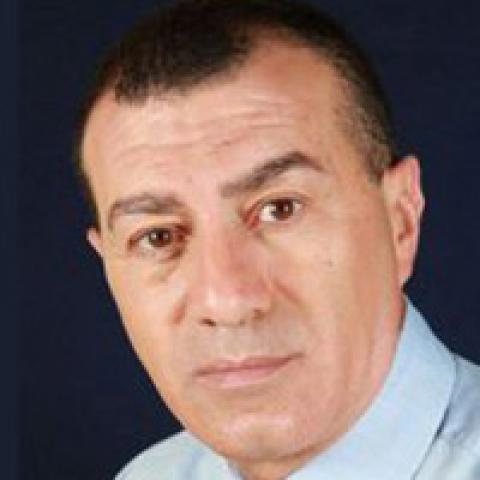

Shortly after the cease-fire between Hamas and Israel came into force on Aug. 26, Mahmoud al-Zahar left his hideaway and began a motorized victory parade through the streets of the Gaza Strip. Hundreds of Gazans cheered him on, pushed their way to the car that drove him and reached out to shake his hand. He smiled and looked content.
Zahar is a surgeon by profession and one of Hamas’ most scathing and sophisticated leaders. He knows that now that the great war with Israel has ended, the great battle begins for the movement's leadership and for the control of its key centers of influence. Therefore, even before the dust on the Gaza war had settled, Zahar hurried to leave his hideout (under Shifa Hospital?) to reap the fruits of victory. In other words, to return to Hamas’ center of action from which he had been suspended less than three years ago.
Khaled Meshaal, Hamas' political bureau chief, is viewed as Zahar’s political archrival. Meshaal waged a war of titans against him and made sure that Zahar would not be elected to the Shura Council (the movement’s highest body); in effect, Meshaal stripped Zahar of all the key roles he had held in the past. But Zahar, also a political wolf, did not give up or surrender. He made good use of the connections he had created over the years with the regime in Iran, and was basically the only person in Hamas who obtained monetary grants from Tehran. These were funneled to the movement’s military wing. Thus, by virtue of Iranian money and the years he had served as a tough, nonpragmatic leader in his movement, Zahar succeeded in keeping close ties and influence over the heads of the military wing (the Izz ad-Din al-Qassam Brigades). They needed financial resources after all other monetary sources had dried up and evaporated.
Hamas is a movement with many control centers. While the Gaza leadership waged a bitter, behind-the-scenes battle against movement head Khaled Meshaal, the latter viewed the Protective Edge campaign as a rare opportunity to shore up his position that had weakened over the years. In the past, Meshaal had already sensed that he had reached the end of the road in the movement. In January 2012, when he felt that opposition to his leadership was growing, Meshaal announced his resignation and said that he would no longer offer his candidacy to the Shura Council. “I will be a faithful soldier in Hamas, but I will no longer lead,” he stated at the time.


