



Israel fears terror spillover from Gaza to West Bank
The growing economic crisis in the West Bank coupled with Hamas assaults on Israel and the destruction in Gaza risk provoking more terror attacks in the West Bank.
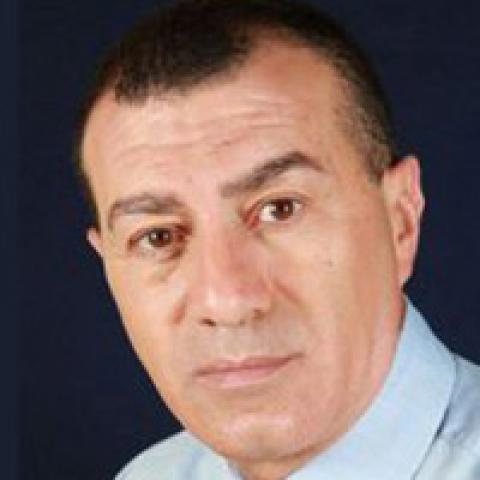

In the course of the first week of Operation Protective Edge, I conversed with the editor-in-chief of a Palestinian radio station in Ramallah. I asked him how the West Bank residents view the armed conflict with Hamas in the Gaza Strip. “People here are laughing at you,” he told me. “If that is Israel, then we ourselves can liberate Jaffa, Acre and Haifa.”
My Palestinian colleague from Ramallah expressed his admiration at the power that Hamas has assembled, and which surprised the West Bank residents. But he also mainly expressed what he viewed as Israel’s feeble and indecisive response. (Israel agreed to a cease-fire after a volley of rockets was launched against Tel Aviv and even farther north on July 15.) Two days later, on July 17, after Hamas’ attack on the Gaza-Israel border from a terror tunnel, the Israel Defense Forces (IDF) initiated the ground offensive stage of the operation. At that point, the admiration in the West Bank turned into great worry, not only in light of the happenings in Gaza but also due to the fear that the violence could boil over into the place where everything began. After all, the military operation began in Gaza after the murder of the three high school youths in the West Bank Etzion settlement.
When Operation Protective Edge seemed to be winding down, the Israelis received a painful reminder that the West Bank is not treading water. On Aug. 4, two terror attacks were carried out in Jerusalem: a tractor terrorist attack in which Rabbi Avraham Walles was trampled and killed, and a drive-by shooting attack in the Mount Scopus tunnel that left an IDF soldier in serious condition. Each of the assaults was carried out by a lone attacker who was not operationally connected to any terror organization or cell. Each decided on his own to conduct a private jihad, whether out of momentary insanity or after advance planning.
According to the 2013 Annual Summary of the Shin Bet, six Israelis were killed and 44 were wounded in terror attacks in 2013, some of which were carried out by lone terrorists. The trend of lone terrorist attacks continued in 2014 as well, at the height of which police Chief Superintendent Baruch Mizrahi was murdered at the Tarkumiya junction near Hebron on the eve of Passover by Ziad Awad, one of the terrorists released in the Gilad Shalit prisoner exchange deal.


