



Alternative Holocaust ceremonies draw young Israelis
Young Israelis prefer the alternative Holocaust ceremony over the state one, where suffering is not reclaimed by Jews only and the trauma is a basis on which to rebuild the society.
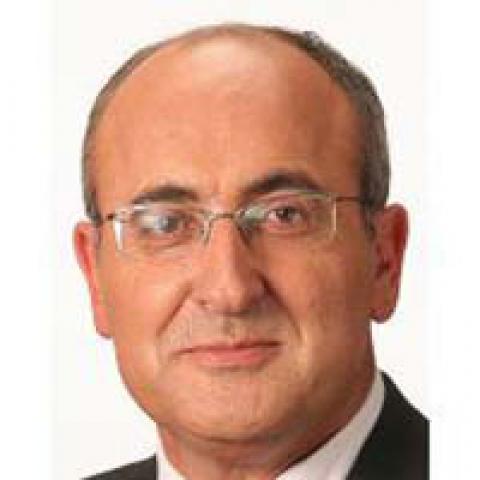

Two years ago, in 2012, professor Moshe Zimmermann, a historian at Hebrew University, was invited to speak at a ceremony marking Holocaust Remembrance Day. Zimmermann was surprised by the invitation. For years he has been keeping away from official ceremonies, and on more than one occasion had criticized what he described in the media as the commemoration ritual of the Holocaust. As a scholar of German history, whose family immigrated to Israel from Hamburg, he considers himself competent to talk about the Holocaust, and especially about the ways to immortalize its memory.
The organizer, Avi Gibson, explained that the event in question was an alternative Holocaust Remembrance ceremony and had nothing to do with the official ceremony at Yad Vashem Holocaust Museum. Zimmermann accepted the invitation. “I was glad to hear that there are other events that view the lessons of the Holocaust in a different light,” Zimmermann told Al-Monitor, “and that’s why I agreed to take part.”
Gibson and Shahara Blau came up with the idea and initiated the alternative Holocaust Remembrance Day ceremony in 1999. They had had enough of the official ceremonies, of the sense of endless victimhood and feelings of revenge emoted by the official speakers.
The two, in their 30s, decided to take action. They ran a small ad in Tel Aviv, calling on people to take part in the event. They were so skeptical that they expected only a few dozen people would show up. To their amazement, many hundreds arrived. The Tmuna hall on the city’s Shonzino Street was filled to capacity, and many were turned away.


