The most essential role of the position of a vice president is to allow for a smooth transition in case the president becomes incapacitated. In many autocratic systems, presidents are afraid to appoint a vice president precisely for that reason. Palestine had not been an exception to this, until now.
The Palestinian Basic Law, a sort of temporary constitution, does not reference a position of vice president in any of its articles. Palestine’s first president, Yasser Arafat, never had a vice president, but he did anoint Mahmoud Abbas, the secretary-general of the Palestine Liberation Organization's (PLO) Executive Committee, as his No. 2.
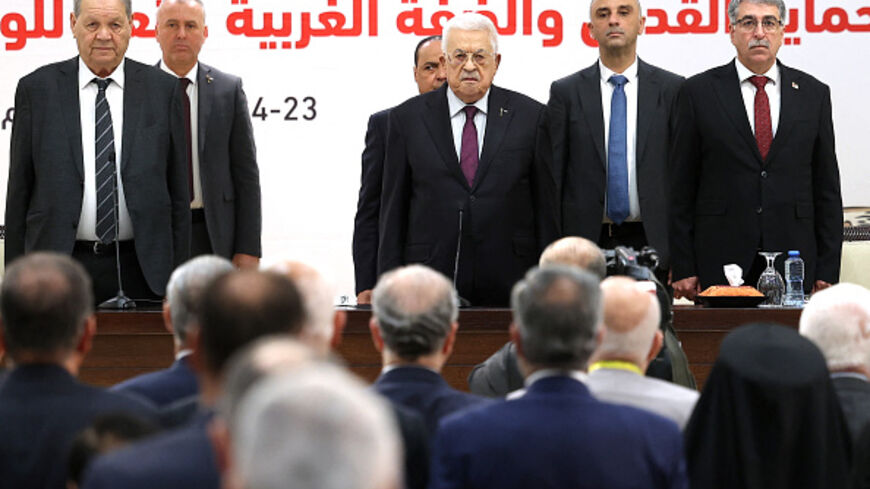
Abbas was elected Palestinian president in 2005, after Arafat's death and following a 60-day transitional period led by the speaker of the Palestinian Legislative Council (PLC), Rauhi Fatouh. The 78-year-old Abbas has dropped no hints about a preferred successor, but he has approved a legal research process to create such a position.
While article 34 of the Basic Law allows for a sitting president to make temporary laws, it is believed that creating the position of vice president requires a vote by the currently inactive PLC. The problem is further compounded by the last elected speaker of the Palestinian legislature, Abdel Aziz Dweik, being a strong supporter of Hamas.
AL-MONITOR All-Access gives you unlimited access to all our journalism, the full Daily Briefing, exclusive interviews, premium newsletters, and live events — for less than $2/week.