



Rajoub: an agreement with Israel is within reach
In an interview with Al-Monitor, Fatah senior official Jibril Rajoub is optimistic on peace talks: "If the Israelis are willing, creative solutions can be found for everything.”
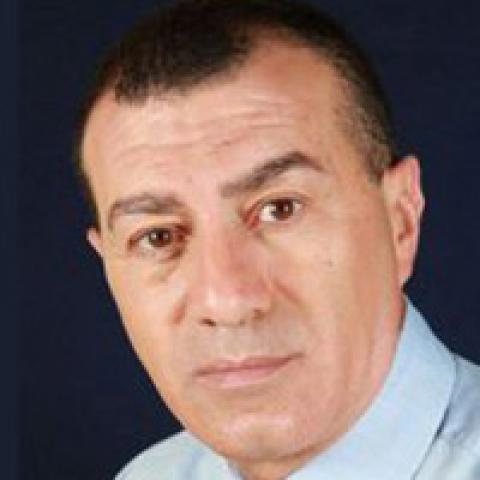

Fatah's Central Committee Deputy Secretary Jibril Rajoub is optimistic. As one of the people closest to Palestinian President Mahmoud Abbas, he is intimately aware of all the enormous hurdles and obstacles along the way to a diplomatic agreement with Israel. But in his view, Secretary of State John Kerry’s guideline will ultimately lead to a peace agreement based on a two-state solution. It is not because the Israeli leadership, headed by Prime Minister Benjamin Netanyahu, is interested in a compromise with the Palestinians, but because of international pressure on Israel, which has been intensifying over time.
“Netanyahu is the neighborhood bully,” he kept repeating every few moments during a phone call this week on Feb. 10 with Al-Monitor, “but the expansion in the West Bank, the settlements, the racism and the annexation of land — all that is over.” Rajoub explains that even Netanyahu now realizes that the rules of the game have changed, and what two intifadas and a violent struggle against Israel have failed to achieve, the international Boycott, Divestment and Sanctions movement (BDS) will. “It should worry the Israelis. Israel has become an extremist state. What is happening with the settlers in the West Bank is a black stain on the Jews, and I don’t want to use any worse terms to describe it.”
According to the senior Fatah member, “If the Israelis want to ensure their future and the future of their grandchildren, the way to do that is through a Palestinian state. Netanyahu is now facing the entire world, and he is no longer able to dictate his will. He knows that he must accept international norms, because the world has changed. Everyone is fed up.”
Rajoub returned to the West Bank this week after attending the opening ceremony of the Winter Olympics in Russia in his capacity as chairman of the Palestinian Olympic Committee and as someone who is trying to promote various branches of sport in the Palestinian Authority (PA). However, his most important visit recently was to Tehran on Jan. 28. In an interview with Ali Hashem, Rajoub said that he arrived for talks in the Islamic Republic at the request of Abbas, to open a fresh page in the Palestinians’ relationship with the Iranian regime. He received a warm reception from Iranian Foreign Minister Mohammad Javad Zarif and returned to the West Bank feeling that closer relations are possible and will be happening soon. Palestinian Foreign Minister Riyad al-Malki will also be going to Tehran in the near future. Rajoub is not worried about the Israeli response to the change in diplomatic direction among the Palestinians. “Iran is different today,” he explains. “The Americans have already realized that, and it is a good idea for the Israelis to internalize it, too.”


