



Israel should reach out to separatist Syrian Kurds
Israel should consider the Kurdish achievement of establishing an autonomous region in Syria and reach out to those groups which fight extremist Islamic powers in the country.
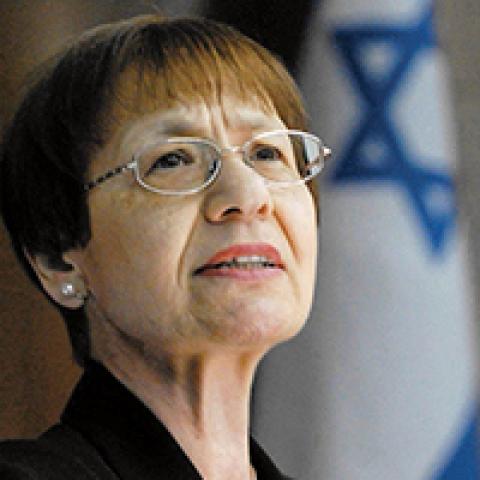

At the end of 2013, the Kurds of Syria made a few unprecedented moves: They declared the establishment of a Kurdish autonomous region in Syria, published a draft of a Kurdish constitution, called for elections to a Kurdish parliament in four months and decided to join the upcoming Geneva conference on Syria as a unified delegation separate from both the government and the opposition. These bold moves indicate that while the Syrian regime and the myriad of opposition groups are busy destroying the Syrian state and each other, the Kurds of Syria are working assiduously to develop their own nation-building and state-building project. The main political group which appears to be leading the project is the PYD headed by Salih Muslim and co-chairwoman Asia Abdullah. In fact, the main power behind it is the PKK, based in Turkey and in Iraqi Kurdistan.
In many ways, the Kurds of Syria are walking in the footsteps of their brethren in Iraqi Kurdistan who had initiated their project in 1991 when they established the Kurdistan Regional Government (KRG). Like the KRG, the Kurdish entity in Syria has all the trappings of a semi independent region. It has a flag, army, police, and administration of its own. It, too, has declared autonomy against all odds. Not only did the Syrian opposition with which the Kurds were allied for some time come out strongly against it, but many other states in the region — particularly Turkey, Iran and Iraq — followed suit because of the fear of spillover effects on their own Kurdish population. (The Kurds of Iran, for example, started demanding a federal system in Iran). However, in not heeding threats from either the Syrian opposition or those states, the Kurds proved their assertiveness in drafting a constitution which aims at turning these achievements into a fait accompli.
A quick look at this constitution will show how far they went.
First of all, the terminology reflects the new worldview which informs the Kurdish discourse. The constitution refers to the region as Kurdistan Rojava, namely Western Kurdistan. This means that the Kurds' term of reference is no longer Syria but Greater Kurdistan, which forms part of four countries: northern Kurdistan (Turkey), southern Kurdistan (Iraq), eastern Kurdistan (Iran) and western Kurdistan (Syria). While insisting on the Kurds’ right for self-determination, the constitution espouses federalism with the central government in Syria. The constitution stipulates that the region (iqlim) will be headed by a president to be elected directly by the people. Similarly, the region will have a parliament and government of its own, separate from the central government, as well as a national anthem and a national holiday, Nowruz. After years of linguicide, the Kurdish language will be — together with Arabic — the official language of the region. The constitution stipulates that Rojava Kurdistan will have a military force of its own whose task will be to protect the “region’s borders.”


