



Elif Shafak: 'Turkey is a country of collective amnesia'
In an exclusive interview with Al-Monitor, acclaimed novelist Elif Shafak discusses her new book, literature, politics and identity in Turkey.
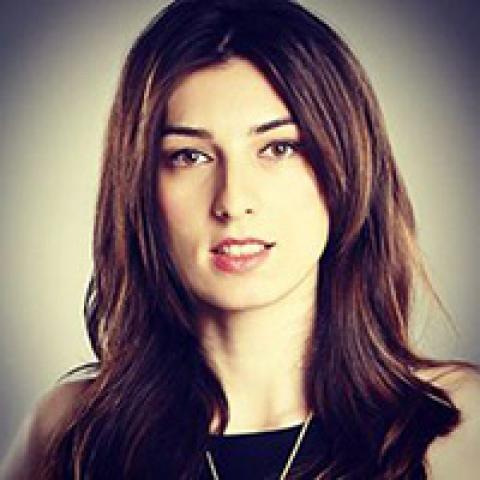

To my delight, Elif Shafak, an established Turkish author, columnist, speaker and academic, spoke exclusively to Al-Monitor about her newly published book in Turkish (to be published in English by Penguin in autumn 2014), on art and politics in Turkey and the region. With 13 books, nine of which are novels, published in more than 40 countries, Elif Shafak is one of Turkey’s best-known authors in the world, but also an active political commentator, columnist and public speaker.
Al Monitor: In this latest novel, set in the 16th-century Ottoman Empire, you write about Istanbul of the time as a cosmopolitan, diverse place, and you depict lives of various types of people who live in it: from sultans to slaves. One of the main characters you talk about in the book is Mimar Sinan, the architectural master of the Ottoman period. What new did we learn about him or his works, and the process of art production at the time?
Shafak: My new novel is centered on a white Indian elephant sent to the Ottoman sultan as a royal gift. This exceptional animal is put to work in the construction of the magnificent mosques we know today, such as Suleymaniye or Selimiye. Hence, we meet Sinan, the greatest architect in the Ottoman Empire. As the story unfolds we get to meet gypsies, Sufis, women, criminals, prostitutes … all the characters that Turkish official historiography tends to ignore and marginalize. I tell the story of the architect and his closest apprentices. Sinan was amazing not only as an architect and artisan but also as an urban planner. For him, it was important to protect history, respect the environment before starting a construction. There is an interesting chapter in the book where he razes the hovels illegally built around the Hagia Sophia. He is lambasted for that. They say, “How can you protect an infidel’s temple?” But Sinan equally respects churches, synagogues, mosques and the soul of the city of Istanbul.
Al-Monitor: Let’s come back to the present. Turkey’s neighborhood has always been a troubled one, and regional instability naturally affects the country. But, what about art? Can and should politics and art be discussed separately?


