



US, Turkey to rethink Syria policies
For starters, the United States and Turkey need to change their approaches to the Syrian Kurdish Democratic Union Party.
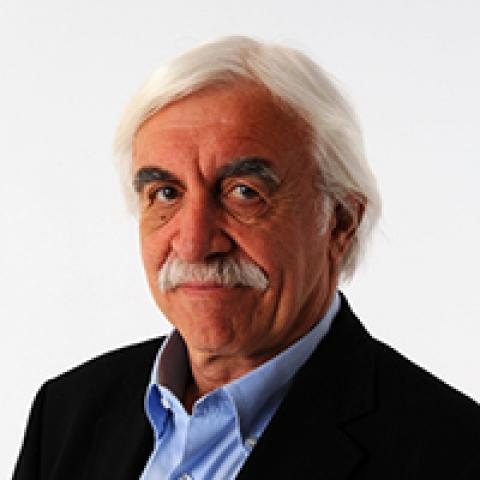

Only about a month has passed since I was rebuked by a very high-level State Department official when I asked why the United States withheld a visa from the Syrian Kurdish leader Salih Muslim, who was to participate at a panel in Washington titled “The Kurdish Role in the New Middle East.”
The American official cited two preconditions for the Syrian Kurdish leader who wanted to come to Washington not only to participate at the panel but also to meet with the US officials. These preconditions — which I had written about earlier in Al-Monitor — were:
- Severing all ties with the Bashar al-Assad regime.
- Integrating with the Syrian opposition.
At that time, that is, about a month ago [Nov. 2013], the discourse developed by Turkish diplomacy on the PYD [Democratic Union Party], which under the leadership of Salih Muslim was governing the Kurdish areas of Syria, was based on the same conditions. Obviously the US, although not seeing eye-to-eye with Ankara’s Syria policy, was careful to appease Turkey. It wasn’t all that hard to detect this from my dialogue with the senior State Department official.
PYD’s dialogue with Assad's regime is a controversial issue, but it is not an established fact. The real puzzling precondition was ‘’integration with the Syrian opposition.” Given the fractured nature of the opposition, who did they mean? Which opposition? Moreover, the PYD was an important organization that was combating the Islamic State of Iraq and al-Sham (ISIS) and Jabhat al-Nusra, both known as Syrian extensions of al-Qaeda. While Syrian opposition is being eroded by jihadist or extremist Islamic groups, what could be the rationale of asking the major Syrian Kurdish fighting element against al-Qaeda to join an ineffective grouping of people who could not reconcile themselves to acknowledging fundamental Kurdish rights?


