



Five Reasons US Should Change Policies Toward Syria’s Kurds
The United States may have been placating Turkey by denying a visa to Salih Muslim, head of Syria's Democratic Union Party.
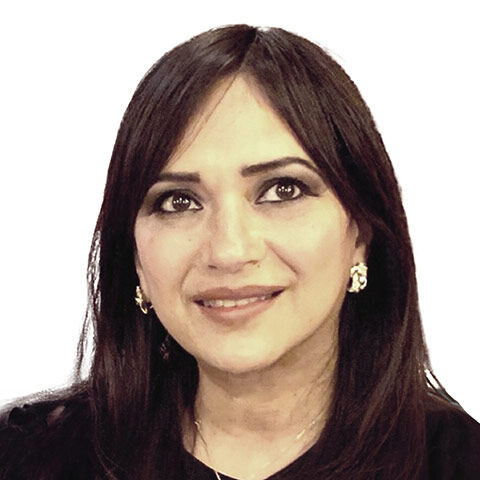

Syria’s most influential Kurdish group, the Democratic Union Party (PYD), which has been running a belt of mainly Kurdish settlements along the Turkish border since July 2012, has been knocking on Washington’s door for some time, but it remains firmly shut. The situation was driven home on Oct. 28 when Kurds from across the globe gathered for a groundbreaking conference called “The Kurdish Role in the New Middle East” held at the National Press Club in Washington, DC.
Organized by Turkey’s largest pro-Kurdish party, the Peace and Democracy Party (BDP), the event offered Washington pundits and policy makers a rare chance to take part in a conversation about the world’s largest ethnic minority, which despite not having a state of its own, has become a key player in the Middle East.
The star speaker was to have been Salih Muslim, the PYD’s co-chair, who was in his native town of Kobani, where he had recently buried his youngest son. Sherwan Muslim, 21, had fought within the ranks of the PYD’s armed wing, the Popular Defense Units (YPG), and was killed by an Islamic State of Iraq and al Sham (ISIS) sniper on Oct. 9. The grieving father’s travel plans were stymied when Iraq's Kurdistan Democratic Party (KDP) denied Muslim entry to Iraqi Kurdistan through the Semelka border gate under the control of the Kurdistan Regional Government (KRG).
According to Barzani’s point man for Syria, Hamid Derbandi, the reason for not letting the PYD leader through had to do with his criticism of the KDP during a recent speech in Stockholm. In the end, the KRG’s obstructionism didn’t matter. Though he denies this, it was widely assumed that Muslim had exited Syria through Yaroubiya, a critical border crossing to Mosul and al-Qaeda’s main supply route, which was captured from ISIS by the YPG on Oct. 26. Ultimately, Muslim made his way to Europe, only for the US government to continue to deny him a visa. He was left to address the conference via Skype.


