



Obama, Rouhani Should Talk More Often
Progress in nuclear negotiations with Iran will have positive consequences for other regional security issues.
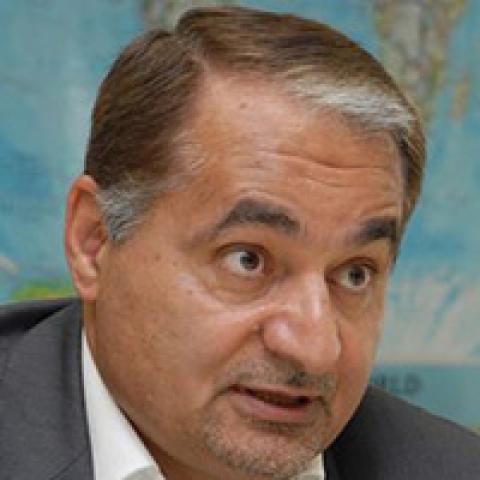

US-Iranian relations are, finally, at a turning point. For years, through hundreds of lectures and articles, I have elaborated on the necessity for the United States to end its regime change policy and avoid using the language of threats and humiliation toward Iran. The emphasis should instead be on detailing a “grand agenda” to revive bilateral relations based on mutual respect and interests. On the nuclear file, a peaceful resolution would be based within the framework of the nuclear Non-Proliferation Treaty (NPT) and operationalizing the religious fatwa issued by Iran's supreme leader, Ayatollah Ali Khamenei, banning the production, stockpiling and use of all weapons of mass destruction, including nuclear weapons.
Presidents Barack Obama and Hassan Rouhani missed the opportunity to meet for bilateral talks and a photo-op on Sept. 25 on the sidelines of the UN General Assembly gathering in New York. Scheduling issues and insufficient time for a substantive outcome were the reasons cited. This setback was short-lived, however, as it was followed by a phone conversation between the two presidents and direct talks between Foreign Minister Mohammad Javad Zarif and Secretary of State John Kerry. These two events were unprecedented in the history of the marred relations between the United States and Iran since the 1979 revolution. The political maturity and braveness of both presidents demonstrate their willingness to end more than three decades of hostilities.
Both historical events could have major implications not only for a US-Iranian rapprochement, but also peace and stability in the Middle East. Having worked on relations between Iran and the West for more than a quarter century, there is no doubt that President Obama’s Sept. 24 address at the UN General Assembly was the most positive statement on Iran made by a US head of state since 1979. It was the first time a US president did not threaten Iran, recognized that tens of thousands of Iranians had been poisoned by Saddam Hussein in his invasion of Iran and the 1980–88 war and acknowledged certain historical reasons for deep-rooted Iranian mistrust for America, in particular its role in overthrowing the Mossadegh government during the Cold War.
On bilateral issues, Obama proposed reviving relations with Iran based on principles of mutual interest and respect, clearly distancing himself from the traditional US policy of regime change. There were also conciliatory statements on the nuclear issue, with Obama recognizing the right of the Iranian people to peaceful nuclear energy and Khamenei’s fatwa against the development of nuclear weapons. He then took the bold step of extending a personal mandate to Secretary Kerry to resolve the nuclear issue and carve out a new relationship with Iran that “will be good for the region and the world.”


