



The Ailing Rabbi Ovadia Yosef, Who Sought to Prevent Wars
Rabbi Ovadia Yosef, the first rabbi who ruled that preventing bloodshed takes precedence over keeping territories, is fighting for his life.
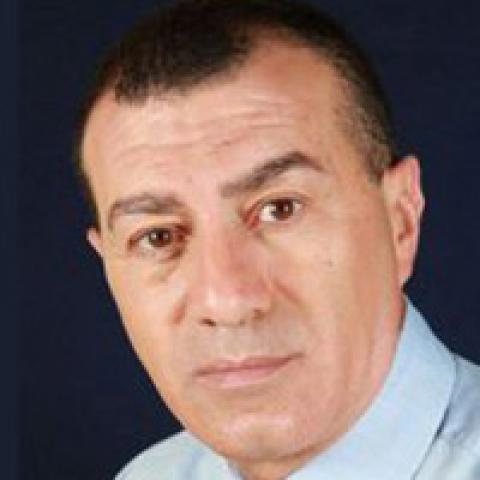

These days Rabbi Ovadia Yosef is fighting for his life. Yosef, 93, one of the most important halachic (Jewish religious law) scholars of recent generations, changed the face of Israeli society and politics and still constitutes one of its most significant forces. Over the years the rabbi was as sensitive as a seismograph to his followers’ sentiments. He was then, and still is, one of the greatest influences on the peace process in the region. Large segments of the Israeli public are following his declining health with trepidation.
In 1979, long before Ultra-Orthodox Shas party was established and became a strong and influential movement, Yosef was the country’s chief Sephardic rabbi. On the agenda was the peace agreement with Egypt, which for the first time in the history of the state entailed a return of land.
At a conference to which he was invited in those days, the rabbi delivered a speech entitled “Jewish law and Peace.” In their fascinating book Rabbi Ovadia Yosef, the Biography, journalists Anshel Pfeffer and Nitzan Chen describe how seriously the rabbi treated the diplomatic issue, researching deeply the point of view of “pikuach nefesh,” the Jewish term denoting the sanctity of life. In his speech he decreed that it’s permissible to give back land in order to prevent war and bloodshed.
“If the heads and commanders of the military, together with members of the cabinet, determine that life may be endangered if parts of the Land of Israel are not returned and there’s a chance of immediate war on the part of the Arab neighbors; and if the lands are returned to them, the danger of war is removed and there are chances of a sustainable peace, it appears there’s no doubt areas of the Land of Israel may be returned for such a purpose, as there’s nothing that stands in the way of preservation of life,” the rabbi said.


