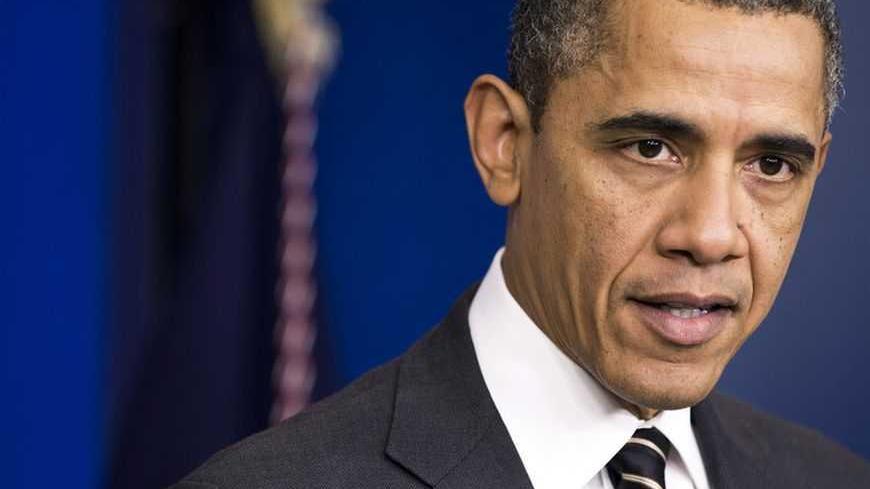
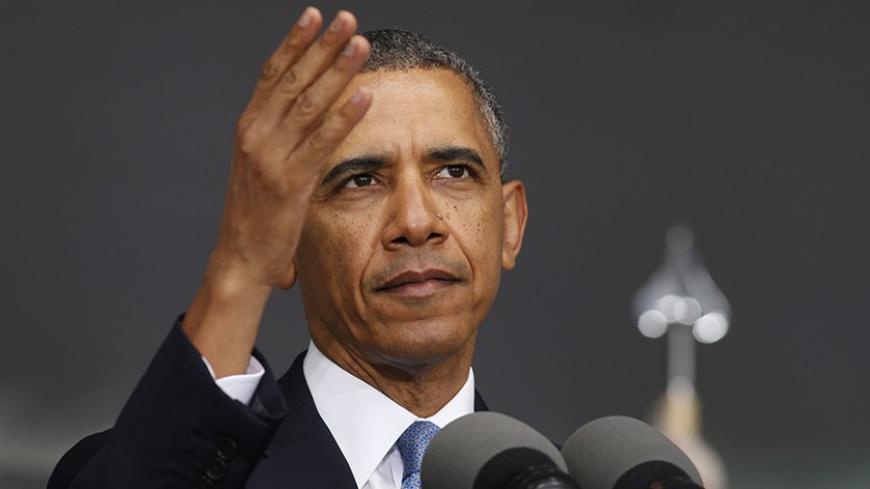
US President Barack Obama gave an extraordinary speech before the UN General Assembly on Sept. 24, one that illuminates the inner struggles of an administration that is being whipsawed by its varying and often contradictory impulses in the region. It is difficult to see who will be reassured by Obama's praiseworthy effort to offer the international community insight into the policy considerations that have produced chaotic, contradictory and frequently maddening policy outcomes across the tumultuous Middle East.
Obama makes the case for an energized US effort in the Middle East at the very moment when, more than at any time in the last seven decades, its power and commitment to the region are being challenged. He offered a skeptical and critical international audience less of an apologia for a string of controversial US actions than a reaffirmation of their essential validity.
“If I had to do it all over again,” Obama seemed to declare on a range of issues from drone strikes to unilateralism, “I'd do it again the same way.”
It would be impossible to conclude from the president's remarks that he is leading a nation in the midst of a self-declared effort to disentangle itself from the costly web of intervention in the broader Middle East and “pivot” to the rising power of China in the Far East or to compare the template for American policy interests Obama explained in unprecedented detail with, for example, the “new model of relations” governing US-China ties announced at the Sunnylands summit in June.
AL-MONITOR All-Access gives you unlimited access to all our journalism, the full Daily Briefing, exclusive interviews, premium newsletters, and live events — for less than $2/week.