



Rouhani, Suleiman: Vanguards Of Moderation in Middle East
Like his counterpart in Beirut, Tehran’s new President Hassan Rouhani embraces just the kind of moderation the region may need at this tumultuous time.
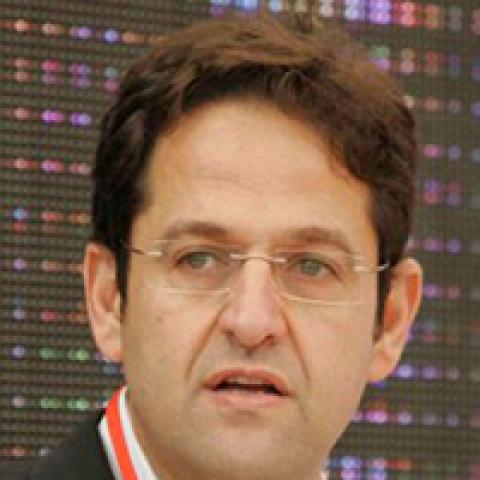

The visit of Lebanese President Michel Suleiman to Iran last week, where he attended the swearing-in ceremony of Iranian President Hassan Rouhani, is noteworthy in several respects. Even though they are separated by barriers of language and geography, they nevertheless exhibit several points of similarity that merit attention.
This applies particularly to the personal style adopted by both men, as well as the circumstances surrounding them and the role each finds thrust upon his shoulders. The Iranian president — or the “moderate president,” as the media prefers to call him — has made moderation his standard, one which he carried all the way to the presidency. In this he was supported by the moderate sentiments and a mobilized public, which in itself indicated something about the vitality of Iranian society and its desire for change. Rouhani's ascent to the presidency also constituted a genuine earthquake. Not only in terms of the result itself (which was accomplished without a runoff round), but also regarding the vast difference between him and candidates Mohammad Rezai and Mohammad Ghalibaf, who were affiliated with the Revolutionary Guard (IRGC) and led it militarily, in one form or another.
As for the Lebanese president, he also rode the wave of moderation to the top spot in the Lebanese republic, after the schism between the rival March 8 and March 14 camps had grown so deep that it became impossible for them to agree on any other figure to lead the country. President Suleiman articulated the principle of moderation and made it the foundation of his policy both at home and abroad. Indeed, he transformed it into a doctrine that turned into the motto of his term in office, one which he dubbed “positive neutrality,” in accordance with the Baabda Declaration. This document became the defining charter of his government, once it was approved by all of Lebanon's contending parties.
“Positive neutrality” was intended to spare Lebanon the burdens of regional conflicts, which had already spilled over into its territory and come to threaten its social fabric with dissolution, especially in light of the rising tide of sectarian wars and, in particular, the intensifying Sunni-Shiite conflict. The positive aspect of this neutrality entails a commitment to legitimate causes, but without embroiling Lebanon in escalating situations and military conflicts that would exceed this small country's capacity to endure — and which, even beyond that, would contradict its historical mission.


