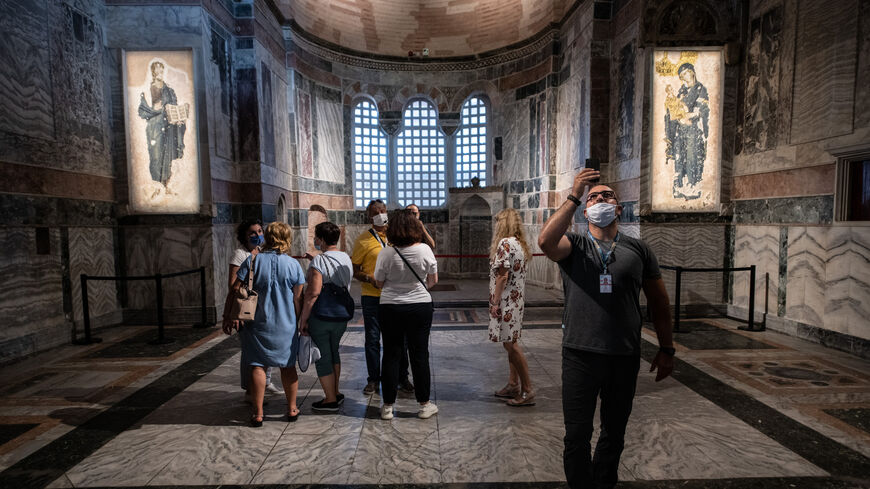
Perched on a grassy hill overlooking the Black Sea, the Hagia Sophia church in the northeastern port city of Trabzon is hailed as one of the finest, and pitifully rare, examples of late Byzantine architecture still standing in Turkey. As The Economist’s Bruce Clark put it in Twice a Stranger, his much acclaimed history of the population exchange between Turkey and Greece in the early 1920s, “the frescoed biblical scenes in the church of Hagia Sophia … are evidence that the Greek spirit flowered with particular brilliance in the 13th century.”
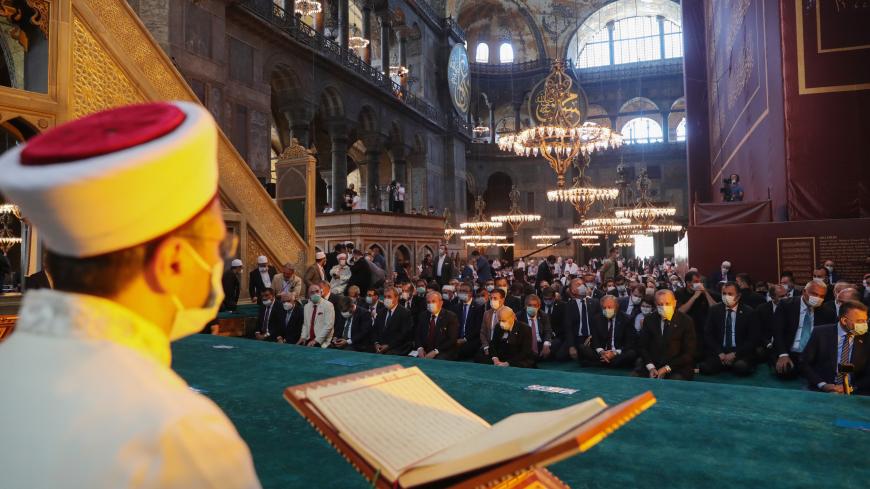
Today, the Greek spirit at Hagia Sophia has been all but extinguished, its frescoes determinedly concealed by tenting stretched under its central dome, and its magnificent tiled floors obscured by crimson carpeting. A Turkish flag hoisted by a newly erected preacher’s pulpit drove the message home: Hagia Sophia is ours. What had happened?
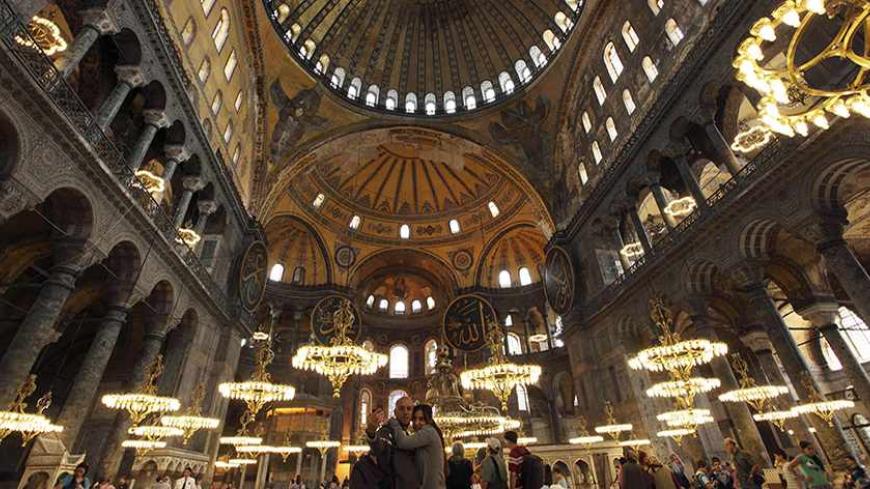
Sadly, it came as no surprise that Hagia Sophia had been converted into a mosque. Built in in the mid-13th century, the church had been at the heart of a long-running dispute between Turkey’s secularists and its Islamists. Its outcome has dramatic implications for the world-famous Hagia Sophia in Istanbul and flies in the face of the ruling Islam-based Justice and Development Party’s (AKP) moves to restore various Christian monuments across the country.
Mosque or museum?
AL-MONITOR All-Access gives you unlimited access to all our journalism, the full Daily Briefing, exclusive interviews, premium newsletters, and live events — for less than $2/week.