



Lapid Criticizes Idle Ultra-Orthodox For Hurting Israeli Economy
The absence of the ultra-Orthodox from Israel's job market is a real threat to the state, but the aggressive attempts by Finance Minister Yair Lapid to solve the wrong problem will have the opposite effect.
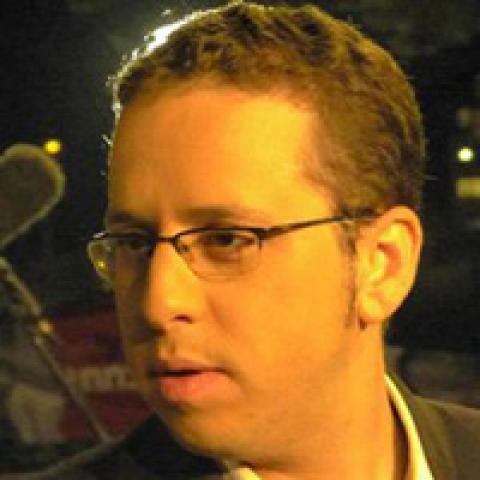

The most frightening man in the state of Israel is probably professor Dan Ben-David of Tel Aviv University. Ben-David, a renowned economics lecturer, is actually a pleasant and affable individual, but the message he bears should be disquieting for any Israeli concerned with the future of his country. As executive director of the Taub Center of Social Policy Studies, Ben-David goes around the lecture circuit and meets people all over the country, illustrating with the help of diagrams and dry statistical data the extent to which the survival of the state of Israel cannot be taken for granted.
The data reveals the annual rate of increase in the number of Israelis who do not participate in the workforce. They are not listed as unemployed because they're not even looking for work. Most of them are ultra-Orthodox. As the percentage of ultra-Orthodox in the population grows — and it has been growing steadily and speedily — the percentage of productive Israelis participating in the workforce grows smaller. Ben-David concludes that given the current state of things, the Israeli economy will soon no longer be able to continue to support the non-working ultra-Orthodox population. Quality of life in Israel is relatively high, but it could have been far higher had there not been an entire sector that has — for years — refrained from joining the job market out of a rigid religious ideology. Unless a radical change takes place, Israel is marching toward the edge of an abyss. The system that has been in place for 65 years simply cannot be viable for much longer.
The public debate in Israel regarding the integration into society of the ultra-Orthodox Jews hardly deals with this issue. The focal point is always “sharing the [military] burden” — the same worn slogan that has long since become a sure springboard for any secular politician wishing to gain popularity. The last one to make use of it was the Yesh Atid chairman, Finance Minister Yair Lapid. Since forming his party at the beginning of 2012, Lapid was careful to declare that he has nothing against the ultra-Orthodox and that, unlike his late father — former Knesset member Tommy Lapid, who headed the Shinui party in the previous decade — his party would not be anti-clerical. The plan for drafting the ultra-Orthodox into the army, which he presented at the start of the election campaign, focused first and foremost on getting the ultra-Orthodox into the job market and only then integrating them into military and national service.
But then — somewhere in the middle of the campaign — Yesh Atid faced a crisis. The polls indicated a decline in support and the strategic advisers decided to hone the message. Lapid, who up until then had spoken about a variety of issues on the agenda, started focusing on the ultra-Orthodox and repeating the “shared burden” refrain. This move paid off when he raked in 19 Knesset seats in the elections in January 2013, becoming the head of the second largest party, after the Likud. Today, too, even as he is attacked for an austerity budget which he has been pushing as finance minister, Lapid still gets positive feedback whenever he criticizes the ultra-Orthodox. In virtually every speech he delivers from the Knesset podium, a significant part of his comments is devoted to attacking the ultra-Orthodox. That’s his comfort zone.


