



Israel’s Plague of Self-Censorship
A series of new academic studies reveals that the self-silencing and mouth-muzzling phenomenon regarding the Israeli-Palestinian conflict has turned into an Israeli plague.
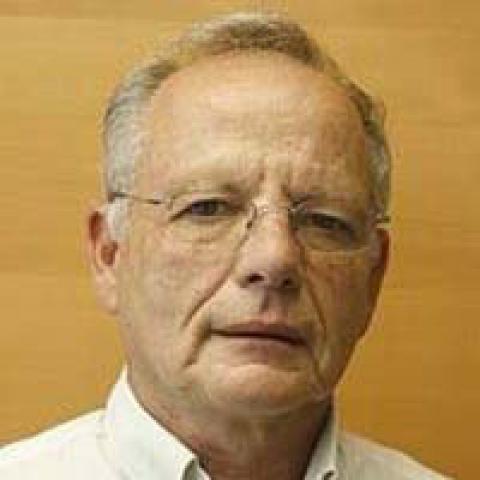

The affair surrounding Edward Snowden, former employee of the United States National Security Agency (NSA) who leaked information about NSA surveillance programs, reminded me of a personal story from more than 30 years ago. In a stormy discussion that took place in the editorial board of the Israeli daily Haaretz, two high-level newspaper employees demanded the shelving of a report I had prepared about how Shin Bet investigators had abused a Palestinian journalist held under administrative detention. They claimed that publication of the article — which was based on a polygraph test — would wreak great damage to the status of the state of Israel. Editor-in-Chief Gershom Schocken ordered the publication of the article in its entirety and even reprimanded one of the higher-ups who had called for me to be dismissed from my post.
I recalled the incident when I listened to a key lecture of professor Daniel Bar-Tal at the International Society of Political Psychology Summer Academy that took place from July 4 to July 7 at the Lauder School of Government, Diplomacy and Strategy, Interdisciplinary Center in Herzliya; Bar-Tal won the organization’s most prestigious prize. For the first time, Bar-Tal released findings of studies revealing the dimensions of the self-censorship plague in Israeli society.
The data presented to hundreds of experts attending the convention from across the world — from Indonesia to Egypt, from the United States to India — are not particularly flattering to a state that prides itself on the title of “the only democracy in the Middle East.” Bar-Tal described a study showing that the Palmach members — the underground of the Jewish community during the British Mandate in Palestine — swore themselves to secrecy regarding immoral acts they committed in the 1948 "War of Independence." The writers of the history of this war in the Israeli Public Diplomacy Forum and its Chief Education Officer Command decided, on their own, to spare readers from reports regarding the expulsion of the Palestinians, even though the historical facts were known to them.
The true circumstances regarding the war against the infiltrators in the 1950s and the border war with Syria in the 1960s were known to the tens of thousands of Israeli soldiers who took an active part in them. The large majority of them kept their lips sealed. “They saw that a false narrative was being created, but preferred to keep the skeletons in the closet,” Bar-Tal said. Another study conducted by the professor and his colleagues showed that the Israelis are aware of the price paid by a democratic society for its self-censorship — less democracy, pluralism or transparency. Nevertheless, they refuse to reveal the wrongs done to the Palestinians — even to Israeli organizations.


