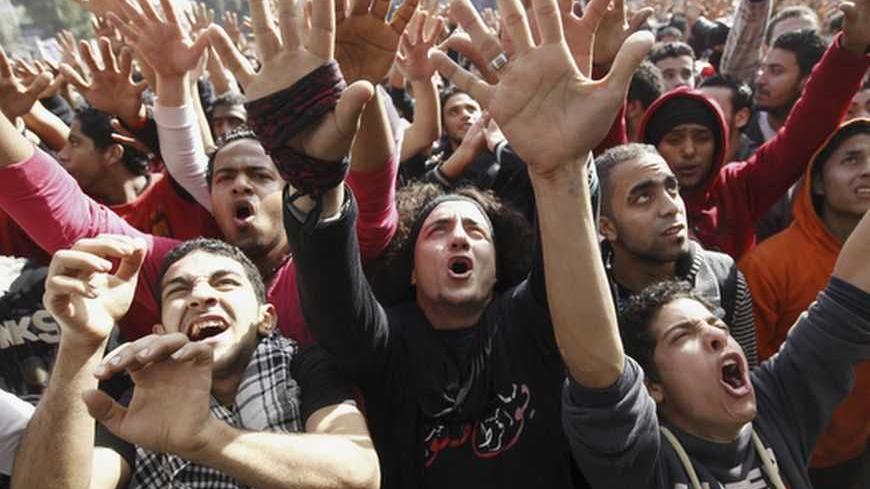
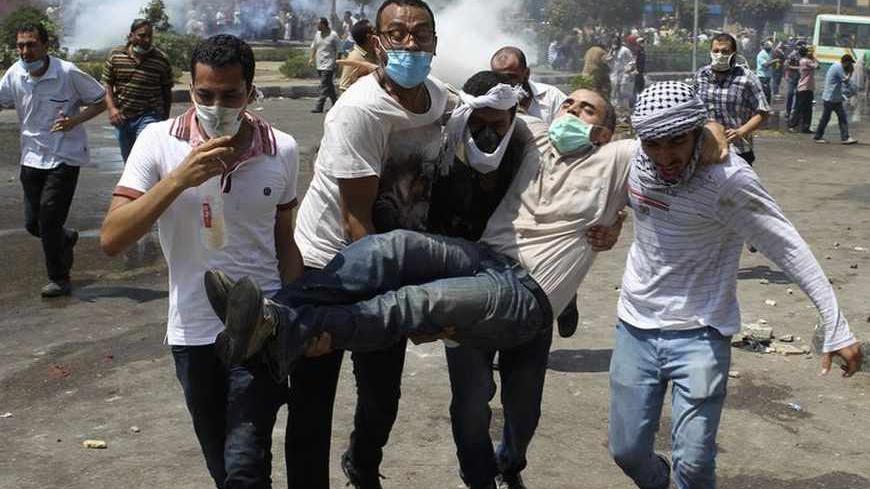
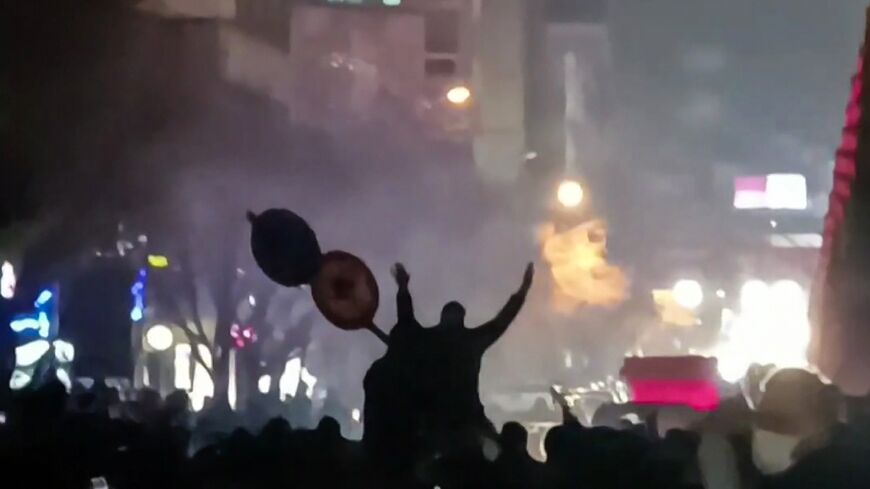
When I think about the Republican Guard's tragedy in which tens of pro-Morsi protesters were killed, it seems to me that I am being blackmailed — either Morsi returns to office and the millions of protesters who filled Egypt's streets on June 30 are totally ignored as anti-democracy, pro-coup people who can't decide for themselves what's in their and their country's interest, or I am held responsible for the unjustified, cold-blooded killing of scores of fellow citizens, Muslim Brotherhood members or not — at the hands of the army.
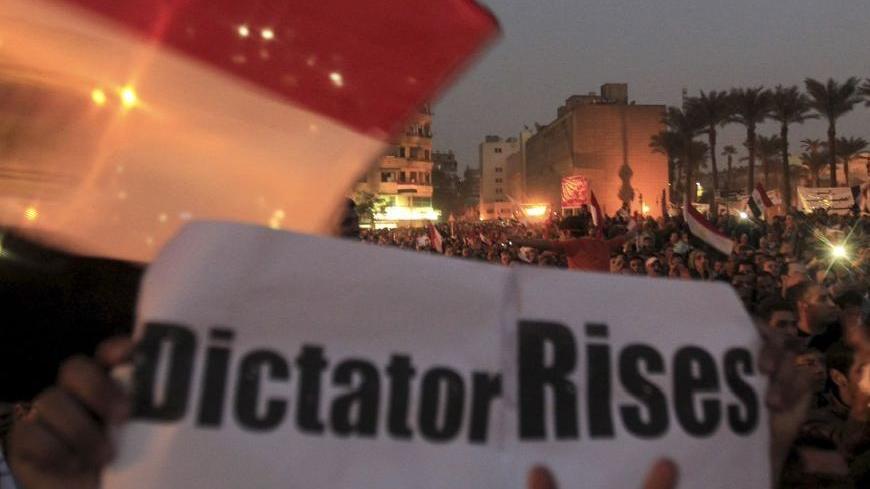
I am blamed for the Republican Guard's tragedy based on my support for the June 30 protests that led to Morsi's ouster and the military's intervention, which eventually led to the occurrence of the sad incident. Not only do I plead not guilty, but I hold responsible Morsi, who told us clearly that we must accept that he stays in office, and who refrained from making any concessions of any kind. Options he shunned included holding early elections, a referendum over his stay in the presidency or even a cabinet change — in defiance of nationwide protests calling for early elections, or else his blood and the blood of his followers would be paid as a price.
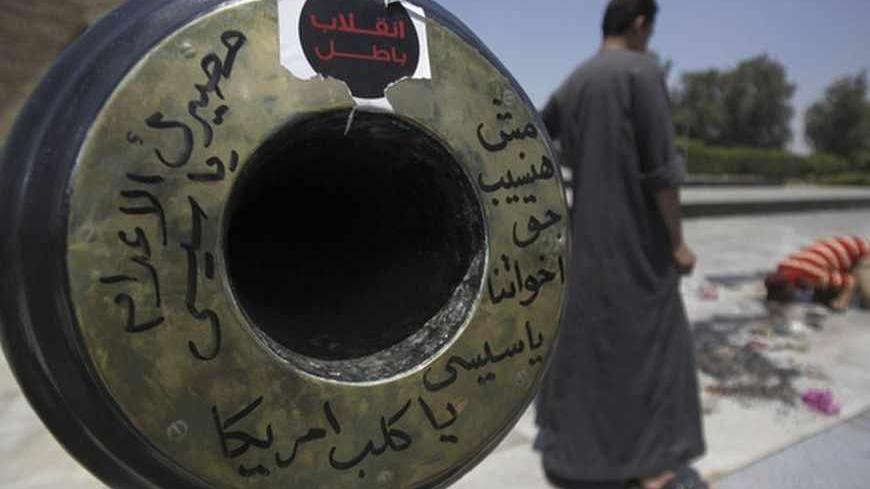
The Muslim Brotherhood's leaders have been issuing a series of public statements calling on their supporters to take part in the Brotherhood-organized protests and marches until Morsi returns to the presidency. These dynamics inevitably involve confrontations with the army and the Interior Ministry that have a well-known record of human rights abuses and brutal crackdown of protests. The group is sending us a message that they will not let this country move on without Morsi being in power. Some may quickly draw analogies to Algeria with a "See? I told you" attitude about the dangers of not engaging "Islamists" into democracy. This argument fails to see that Egypt has not lived in democracy or put on the democratization track since January 2011. The mere holding of elections is not democracy, and if we adopt this cosmetic criterion then we have to bear in mind that in 2005 Mubarak won a new presidency term via a presidential election, too, amid which international media was quick to celebrate: "Winds of change blow in Egypt."
Additionally, in the past two and a half years the Egyptian army adopted violence against both Muslims and Christians, against Islamists and liberals and non-ideologues. Under the rule of the Supreme Council of the Armed Forces (SCAF) that took over from Mubarak in 2011, we have seen the Maspero incident in which army personnel crushed tens of Christian protesters, the Abassiya incident wherein young Islamist — though non-Brotherhood — activists were killed, injured and detained by the army near the headquarters of the Ministry of Defense and the famous Mohamed Mahmoud and Cabinet Council tragedies against activists from various backgrounds. From early on in 2011, SCAF blocked the true path to democracy with its twisted "road map of transition" that started with a referendum over 10 amendments to Mubarak's constitution that had been supposedly invalidated by the constitution, followed by a 60-article constitutional declaration they imposed without a referendum and with widely contested articles that bore multiple interpretations and then parliamentary and presidential elections with no agreed-upon authorities for neither parliament nor the president.
AL-MONITOR All-Access gives you unlimited access to all our journalism, the full Daily Briefing, exclusive interviews, premium newsletters, and live events — for less than $2/week.