



New Poll on Iranian Election Shows Rouhani as Front-Runner
Iran's presidential candidate Hassan Rouhani's outspokenness on important issues could propel him to the presidency at the last minute.
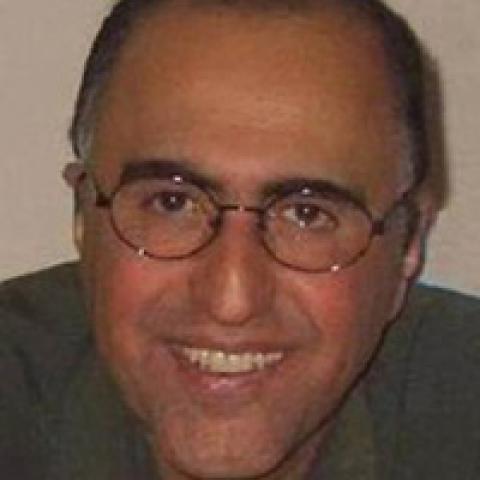

Iran’s presidential elections are full of surprises, from Mohammad Khatami’s landslide victory in 1997 to Mahmoud Ahmadinejad’s rise to the presidency in 2005 to former President Hashemi Rafsanjani’s shocking disqualification this year.
What do they tell us about this year's election?
Until a few days ago, most surveys designated Tehran Mayor Mohammad Bagher Ghalibaf as the unrivalled candidate of this round of elections. Yet, another figure is being discussed as a contender for Ghalibaf. In one of the latest polls, Hassan Rouhani, who stands somewhere at the border of the two camps of principlists and reformists, was ahead of Ghalibaf by 23.3% to 18.4%. Al-Monitor sources attribute this poll to a university center.
In many ways, Rouhani is a fascinating character. Although he is close to the reformist Khatami and the moderate Rafsanjani, he is also the representative of the supreme leader, Ayatollah Ali Khamenei, in one of the most profound centers of decision-making, the Supreme National Security Council. This fact has resulted in him serving during the eight-year presidency of Khatami, as well as the eight-year presidency of Rafsanjani, as the secretary of the National Security Council. He has also served as a member of parliament, heading its foreign policy committee, and has spent 20 years on the Expediency Discernment Council — which continues to this day; he is currently the representative of the people of Tehran in the Assembly of Experts of the Leadership.


