



Erdogan Confronts Himself Over Protests
Turkish Prime Minister Recep Tayyip Erdogan is more challenged by policies of his own making than his political opposition.
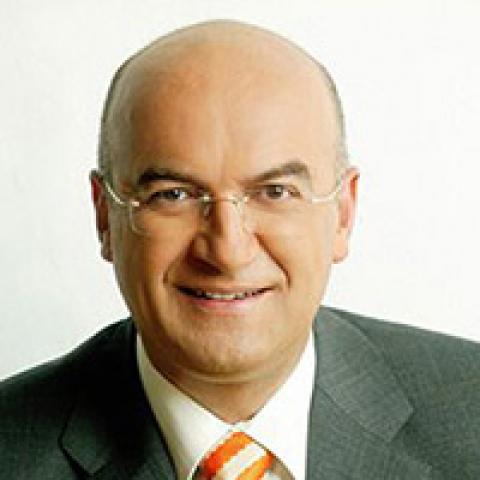

Everyone is curious about Prime Minister Recep Tayyip Erdogan. This is what I felt in my recent visit to European cities, where I was frequently asked for my analysis. What I noted inside and outside Turkey was a mix of curiosity and concern.
What does Erdogan want to do? As a popular leader of a stable party that 11 years ago brought a new political class to parliament and broke the grip of military tutelage, significantly weakened anti-democratic mind-sets and kept the vision of reform alive all this time, is he transitioning from national renewal to dictatorial rule and pomposity? Or is he, engulfed by fear, heading toward an obscure future?
According to many, Erdogan was the worst affected politician in Turkey by the wave of urban protests that emanated from Gezi Park. This view suggests that by adopting the same disproportionally tough attitude in politics as the one he took in the streets and relying on the “will of the nation” (Erdogan’s term for his rallies), the prime minister might not mean much in the long run. Erdogan saw the sudden collapse of efforts to shape an untouchable personality cult around him. Although he has been trying to downplay this collapse with claims of rally attendance in the millions, his anger gives him away. His persistence in sticking to the same language and behavior despite many friendly warnings serves no other purpose than feeding the uncertainties of the country’s future. He most recently denigrated the Taksim Platform, which rose to prominence as an organizer of the street protests, as "nobodies" who did nothing to cool tempers, but worked to the contrary.
One of the answers to the questions lies in political history. The leaders who dominate a country’s governance and their own parties usually face two options: either evolve into respected statesmen and groom successors — thus maintaining political stability — or fail as politicians.


