



Russian Embassy in Beirut Becomes Hub for Syria Diplomacy
With Russia’s diplomatic base relocated from Damascus to Beirut, Moscow is refining its strategy on the Syrian crisis as the second Geneva conference nears.
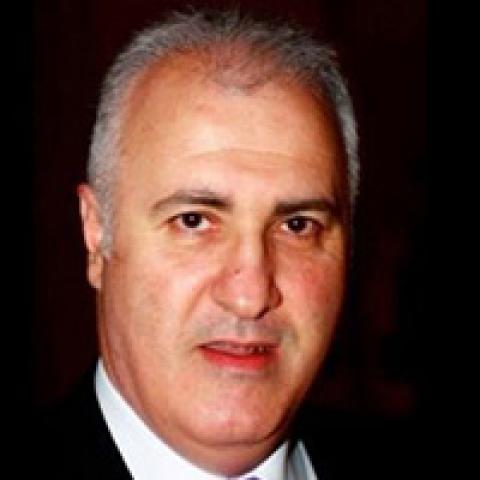

Since the visit of Russian Deputy Foreign Minister Mikhail Bogdanov to Beirut on April 26, the Russian Embassy in the Lebanese capital appears to be a crisis management group charged with solving the Syrian file or a working group preparing for the second Geneva conference. This is the case for several reasons.
Russia’s diplomats have moved from Damascus to Beirut, as have a majority of the diplomatic missions to Syria. In Beirut, the Russians have been able to communicate and interact with external parties on the Syrian crisis more than they could in Damascus. Beirut was chosen over other capitals in states neighboring Syria to be the base of Russian diplomatic work in view of historical, geographical and personal considerations.
Historically, Beirut was the base of the “czarist consul” in the Orient, as well as for other European consuls, during the Ottoman Empire and the period of the emergence of the modern Mashreq countries a century ago. Moreover, Beirut is closer to Damascus than any other neighboring capital.
Regarding personal considerations, one should first note that Bogdanov, in charge of major issues involving Syria at the Russian Ministry of Foreign Affairs, is a personal friend of the Russian ambassador to Lebanon, Alexander Sasbekean. They have been friends since the early 1970s, when they were classmates at the Institute of International Relations, also known as the diplomats’ school, affiliated with the Soviet Ministry of Foreign Affairs.


