



Israeli-Palestinian Treadmill Diplomacy
Pressing on the need to reform the peace process, Nassif Hitti asks whether such a change would actually happen in light of the recent developments and Kerry's visit to the region.
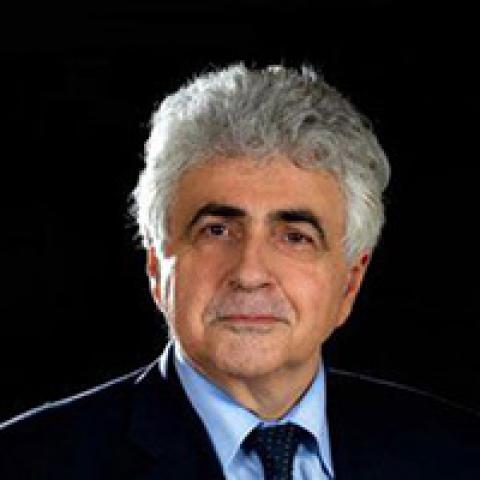

US Secretary of State John Kerry’s reassuring personality, his recurrent statements on the need to retackle and settle the Palestinian-Israeli conflict, his exploratory visits to the region and the window of opportunity provided by the beginning of US President Barack Obama's second term are all elements that encourage an optimistic view. Although a positive development, covering the possible relaunching of the peace process should also be cautiously approached. It is a step long-awaited for by Palestinians and Arabs.
Both Palestinians and Arabs believe that most of the cards are still in Washington’s hands. The Arabs responded to this by deciding at the Arab League summit in Doha to send a ministerial delegation to Washington on April 29 to discuss with Kerry the conditions for a serious relaunch of the peace process.
The peace process has entailed years of struggle: bitter lessons of conflict management rather than serious attempts at conflict settlement, transitional goals rather than permanent ones and ambiguous rather than clearly defined terms of reference. All these, including a self-marginalized third party role fulfilled by the Quartet, a shy observer of a failed process, pushed the Palestinians and Arabs to insist on the need to change the rules of the game.
Thus, there should be serious pressure on having Israel recognize the 1967 borders as those of the Palestinian state with the principle of very limited, balanced and equal values and sizable territorial swaps. The third party role must be redefined as one of facilitator, which closely accompanies the process and guarantees the results. There should be a well-defined time frame for the negotiations process, something that will enable the timely implementation of the necessary steps.


