



Lebanon Premier's Resignation Exposes Lebanon to Instability
Lebanon's prime minister has resigned after two difficult years in office, opening the door to further instability in the country, writes Ali Hashem.
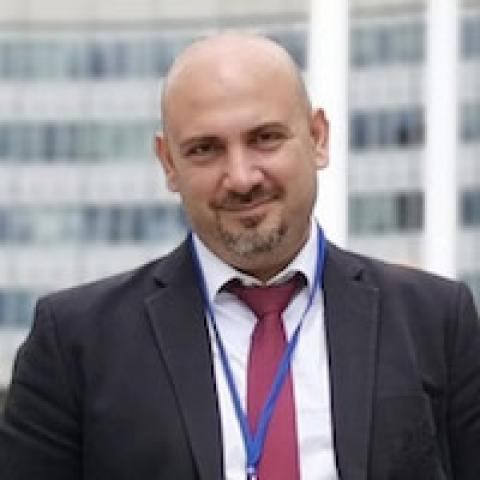

Almost two years after taking office, Lebanon's premier, Najib Mikati, decided it's time to resign. He might have thought many times about the option, but only on March 22 did Lebanon's billionaire prime minister step down.
It's no easy day for Lebanon. The tiny Arab country is facing several complicated security, political, and social situations. On the border with Syria, guns and bullets have the louder voices. Premier Mikati's city, Tripoli, was the scene of widespread clashes between pro-Syrian regime Alawite militias and pro-Syrian opposition Sunni groups. In parallel, the country was facing a general strike that left students and many public servants away from their schools and workplaces. On the other side, politicians were in the middle of a fierce struggle over the electoral law, and the extension of the mandate of internal security chief Ashraf Rifi, a Sunni officer known to be very close to former PM Saad Hariri.
Mikati's resignation left the coalition that backed him in tatters. The March 8 bloc led by Hezbollah knew this day would come. They might have strained before to extend the government's life, but this time it was over. There are differences in almost everything that they believe, even in politics. They were not left with much common ground to stand on, for long. Nevertheless, these weren’t the main reasons behind the decision to quit.
Syria is the answer to any critical question in Lebanon nowadays — though the answers might vary according to the political affiliations of those who are answering the questions. According to a March 8 source, the resignation came after US president Barack Obama's visit to the region. "Obama came to organize the front against Syria, Iran, and Hezbollah," said our source, adding that the US president's speech was an operational order to all allies in the region. The revival of Israeli-Turkish relations and the change of Jordan King Abdullah II's stance toward Syria are all part of the new strategy, "Lebanon should get involved, either by going to the election under the 1960 electoral law that gives 'March 14' the majority or by paralyzing political life," added our March 8 source, who believes it may be time to open up direct contacts with Saad Hariri and agree with him on leading a national unity government.


