



Lebanese Maronites Hope Patriarch is Next Pope
For the first time since Lebanese independence, many Lebanese Maronites think that there is a real chance that their patriarch becomes pope, writes Jean Aziz.

Despite the political crisis, the parliamentary elections impasse, the economic crisis with its demonstrations and sit-ins by the unions, the fragile security situation and the tense military situation on the Syrian border, the Maronites in Lebanon have become preoccupied with another obsession: the hope that a Lebanese pope may be elected.
Another fever has hit the Lebanese Maronites. For the first time in its history, this ancient Christian community, which follows the Vatican, has in the College of Cardinals someone who is both a voter and a candidate, at least in theory. The Maronites are the largest Christian community Lebanon (with about 1 million people in Lebanon and perhaps 6 million worldwide). Since the country’s independence from the French Mandate in 1943, the Lebanese president has always been Maronite and the Vatican has appointed four Maronite cardinals. The first was Patriarch Meouchi, who became patriarch in 1955 and cardinal in 1965. He died in 1975 and never participated in electing a pope. He was succeeded by Patriarch Khreish, who had not yet become cardinal when Pope Paul VI died and Popes John Paul I and II were elected in 1978. Khreish became a cardinal in 1983. The third Maronite cardinal was Patriarch Sfeir, who was elected patriarch in April 1986, and resigned 25 years later in February 2011. He became a cardinal in 1994, which permitted him to participate in the College of Cardinals to elect a successor to John Paul II, who died in 2005. However, Sfeir was 85 years old at the time and deemed retired. He was not allowed to vote nor be elected.
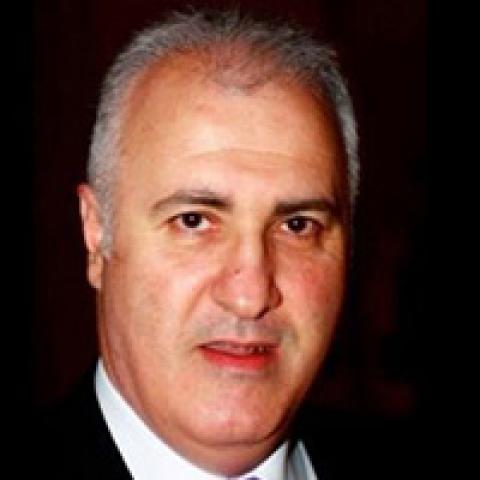
But today, for the first time in the Maronites’ history, current Patriarch Bechara al-Rai is participating as a non-retired member of the College of Cardinals, with the right to both vote and be elected. That has fired up the hopes of many Maronites that a Lebanese pope may be elected.
This fever has a lot of psychological elements. First, Patriarch Rai was appointed cardinal less than six months ago, in November 2012. This has captured the imagination of the Maronites in Lebanon and abroad. It’s as if the Holy Spirit has intervened and inspired the current pope to prepare the way for his successor before resigning. It should be noted that Pope Benedict XVI appointed Rai cardinal along with five others. Another element contributing to the Holy Spirit myth is that the Pope’s last foreign visit was to Lebanon, where he signed the Apostolic Exhortation on the Middle East on Sep. 14, 2012. That left in the minds of the Maronites a picture of the pope with their patriarch, as if it was a handover ceremony between the pope and his successor.


