



Palestinian Finance Minister Resigns Amid Cash Crisis
Minister of Finance Nabil Qassis found himself cornered and unable to deliver proposed reforms to address the Palestinian Authority’s financial crisis, writes Daoud Kuttab.

Khalil Abu Arafeh’s cartoon, which ran in the Sunday, March 3 edition of the leading Palestinian newspaper Al Quds, left no doubt as to the reason behind the resignation of Nabil Qassis, the Palestinian minister of finance. Abu Arafeh showed an empty safe, with Prime Minister Salam Fayyad’s hands folded next to the empty cash box.
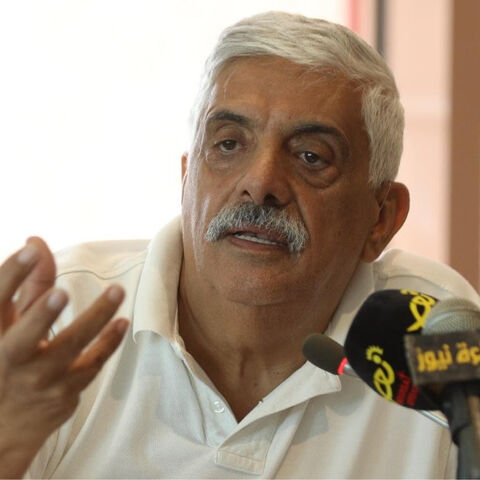
But while the absence of cash is probably the main cause for Qassis' resignation, the only report about it in the Palestinian media — on the Ma’an news agency’s website — drew a more complicated picture. According to the Bethlehem-based online news agency, Fayyad accepted the resignation and commended Qassis for his efforts, but President Mahmoud Abbas refused to accept the resignation and asked his chief of staff to convince the minister to withdraw it.
Qassis, a respected Palestinian academic who has held the position of Birzeit University president and senior negotiator during the post-Madrid talks, has presented a budget of $3.6 billion, which includes a $1.4 billion deficit. This deficit is to be added to the existing $1.2 billion that the Ramallah-based Palestinian government owes to local banks and has been accumulating in the past three years, due in large part to the failure of Arab countries to fulfill their pledges to the Palestinian people. The financial problem was exasperated in recent years due to the US also cutting off funding to the Palestinians.
To remedy the problem, Qassis has suggested a belt-tightening set of deep cuts that include the suspension of any pay raises to public servants and an end to the payment of electricity bills for Palestinian refugee camps in Gaza and the West Bank. Ministry officials estimate that the Qassis recommendations could save $330 million for the Palestinian coffers. Add to that an estimated $800 million in outside support to Palestinians that officials predict will be delivered in 2013, and the deficit would be greatly reduced.


