



Islamic Jihad: Yes to PLO, No to PA
Islamic Jihad has expressed its willingness to join a renewed PLO, but has insisted it will not participate in elections or Palestinian governments, writes Daoud Kuttab.
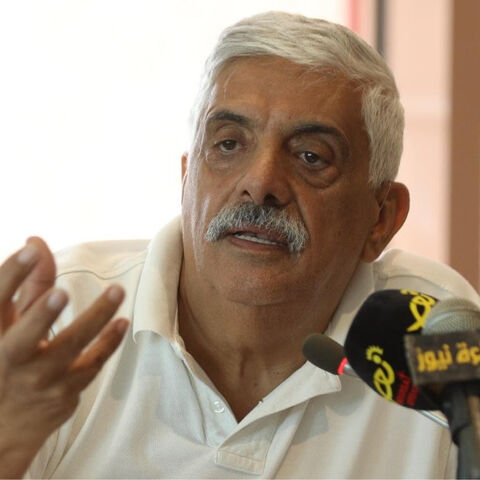

With the bulk of the Palestinian reconciliation effort being focused on Hamas and Fatah, little attention has been paid to other nationalist and Islamic factions that compose the Palestinian movement.
One of these factions is Islamic Jihad, a militant nationalist movement that has adopted Islam politically rather than religiously. Unlike Hamas — which believes in the need to preach Islam to its supporters — Islamic Jihad ignores Islam's social elements and grassroots activity to instead concentrate on its political and military dimensions. This focus means that Islamic Jihad revolves around a smaller, more trained membership because it has no need to attract large numbers of followers.
Islamic Jihad, which has been close to Hamas in recent years, is insistent that it will not support a unified Palestinian government or agree to vote in post-reconciliation presidential and parliamentary elections. It is, however, open to joining a renewed Palestine Liberation Organization (PLO).
Inspired by the Iranian Revolution, Islamic Jihad for Palestine was established in the 1970s in Egypt by the late Fathi Shiqaqi. The movement has been responsible for some of the deadliest attacks against Israelis, especially during the Second intifada. Islamic Jihad was initially close to Fatah, especially in Lebanon. Some would even argue that it was an offshoot of the PLO’s dominant movement. Khalil Wazir (Abu Jihad), the military commander of Fatah, was said to be the major promoter of Islamic elements in Fatah. Regardless, the movement rarely acted in such a way as to embrace the PLO. When Israel went to war in the 1980s against the PLO in Lebanon, Islamic Jihad fought alongside the various PLO groups. When the war ended and PLO fighters left for Tunis, Islamic Jihad ended up in Syria, where it has been based ever since.


