



Sistani Calls for 'Civil State' in Iraq
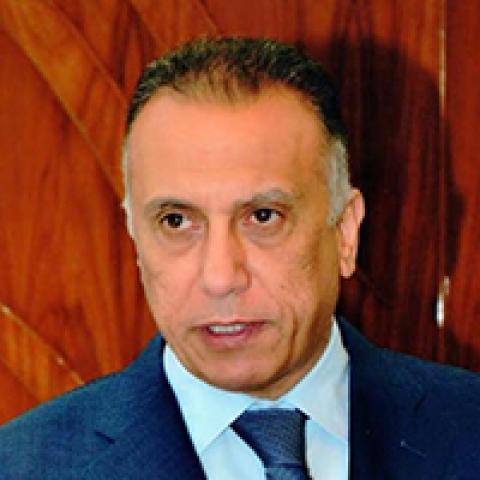
Mustafa al-Kadhimi discusses the role of Ayatollah Ali al-Sistani in Iraqi politics.

Iraqi politicians — whether Shiites, Sunnis or Kurds — have for years tried to drag supreme Shiite cleric Ali al-Sistani into their ongoing political conflicts. To this day, certain parties have not grown tired in their efforts, through any means possible, to bridge the wide gap between the prevailing view in Najaf — based on religious figures maintaining distance from politics — and the prevailing theory in the Iranian city of Qom — based on religious figures assuming political roles.
However, Sistani — a charismatic man who adheres to a near-obsolete legacy that is hard to change — resisted, and is resisting, all of these attempts. He is doing so not only out of an ascetic desire to abstain from politics and power, but also to protect millions of his Shiite followers throughout the world from the effects of severing the thin line between the religious Shiite figure and the political leader.
Sistani recently issued a serious of highly significant recommendations through his representative in Karbala regarding the crisis represented by the Sunni demonstrations in Iraq. He said that he is calling for a "civil state," based on respect for the law and the constitution, human rights, and equality.
This supreme Islamic religious figure did not talk about a "religious state," nor did he fill his speech to politicians and the public with religious expressions, Quranic verses, or sayings from the prophet. Rather, with clarity and in a language understood throughout the world, he called for "a civil state."


