



The Return of Rafsanjani? Don’t Count on it
Some Iran observers believe Akbar Hashemi Rafsanjani is aiming at a political comeback, despite his denials. But the former Iranian president probably knows his chances of another crack at the office are slim, Shaul Bakhash writes.
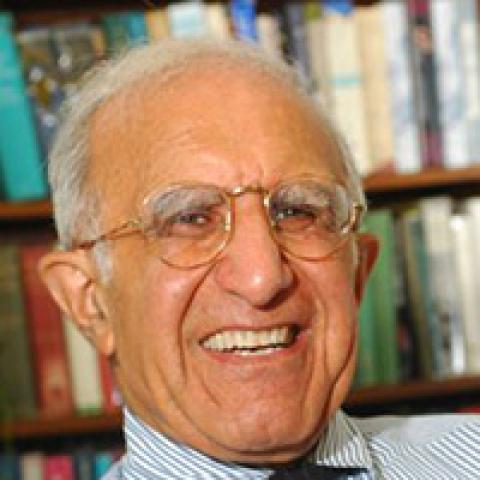

Akbar Hashemi Rafsanjani, Iran’s former president and grand man of politics, denied in an interview last week (Oct. 7) that he will run for president in the elections next year. But his very denial, coupled with remarks that he and men close to him have recently made, has set the rumor mills in Tehran buzzing: Rafsanjani is aiming at a comeback!
In an interview with the little-known newspaper Arman-e Ravabet-e Umumi, Rafsanjani noted that there were no legal barriers to his candidacy, but said he did not wish to run. The choice of an obscure newspaper to make this announcement was a bit odd, but the same paper ignited speculation about Rafsanjani’s presidential intentions with a front-page story five days earlier that quoted Rafsanjani as telling a close associate, Ali Akbar Nateq Nouri, “I will without hesitation be on the scene for the 11th presidential elections.” Nouri, the newspaper reported, had urged Rafsanjani to respond to attacks on himself and his family — attacks, Nouri said, that were causing concern for revolutionaries, merchants in the bazaar and members of the clergy.
“Come out openly," Nouri, a former parliament speaker and presidential candidate himself, reportedly told Rafsanjani, “and we will stand behind you.” The newspaper cited no source for this information.
Rafsanjani himself helped fuel speculation about his presidential ambitions with a recent call for a government of “national unity” that would carry out the wishes of the people, fully implement the constitution, end confrontations and address Iran’s “international problems.” A national unity government is presumably his formula for an Iran that faces division and crisis at home and the threat of attack from abroad. One of Rafsanjani’s sons, Mohsen Hashemi, has remarked that the times require “an individual fashioned for times of difficulty and crisis.” And analysts have pointed to Rafsanjani’s strengths: He is a pragmatist and a man of the center; he can still garner support from conservative but centrist religious scholars, the bazaar and the older generation of government men and he might be a credible healer of wounds and negotiator with Washington.


