



Is Ahmadinejad Facing a Final Showdown with Rafsanjani?
As Iranian President Ahmadinejad loses influence and the support of the ruling elite, his arch-enemy, Akbar Hashemi Rafsanjani, may be due for a political comeback. Shahir Shahidsaless writes that the "comfortable and confident" former president offers solutions to Iran's crisis, and may well have won the support of the Supreme Leader.
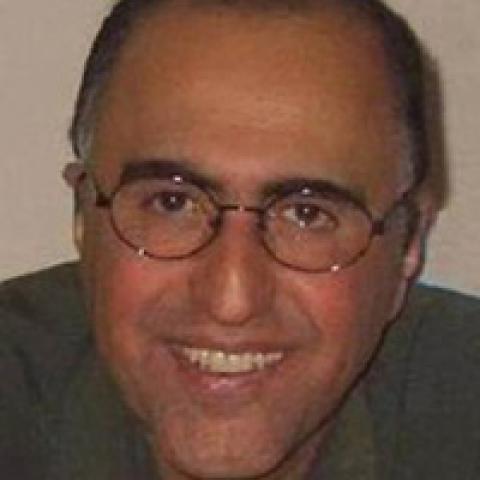

Akbar Hashemi Rafsanjani (known as both Hashemi and Rafsanjani) is one of the founders of the Islamic Republic of Iran. Rafsanjani, ex-chairman of the Iranian Parliament and the president of Iran from 1989 to 1997, currently heads the Expediency Council, which acts as the advising body to Supreme Leader Ayatollah Sayyed Ali Hosseini Khamenei. The Expediency Council also mediates between the parliament and the Guardian Council that vets all legislation. Known as a pragmatic politician, Rafsanjani was one of the most influential political figures in Iran for 26 years.
However, in 2005 Rafsanjani’s star began to wane. During that year’s presidential elections, Rafsanjani competed against Ahmadinejad through the second round. Ahmadinejad, supported by religious conservatives and the Iranian Revolutionary Guard Corps (IRGC), won the election. Subsequently, Mohammad Bagher Zolghadr, then-deputy commander of the IRGC, maintained that Ahmadinejad’s victory actualized thanks to a “multi-layer and complicated” plan.
Four years later, the disputed 2009 presidential elections kindled massive street protests. Mahmoud Ahmadinejad and his conservative supporters, overtly backed by the Supreme Leader, clashed with middle and upper-class urbanites, which emerged as the Green Movement. The movement was represented by defeated presidential candidate Mir Hossein Mousavi, who was supported by Rafsanjani.
These tremendous protests, mainly in Tehran, led the Green Movement leaders and Rafsanjani to believe that they were positioned to flex political muscle and win concessions from their rivals. In the West, a near-unanimous majority of commentators believed that a color revolution was in the making. In actuality, these clashes were manifested by the revival of a struggle within Iran’s fragmented society. Iranian sociologist Ramin Jahanbegloo describes this as a continuous tension between tradition and modernity, both with significant grassroots support.


