



Bone Marrow Registry in Jerusalem Offers Hope to Arab Cancer Patients
The Hadassah Center in Jerusalem offers the only extensive Arab-specific bone marrow registry in the world for cancer patients, writes Cale Salih.
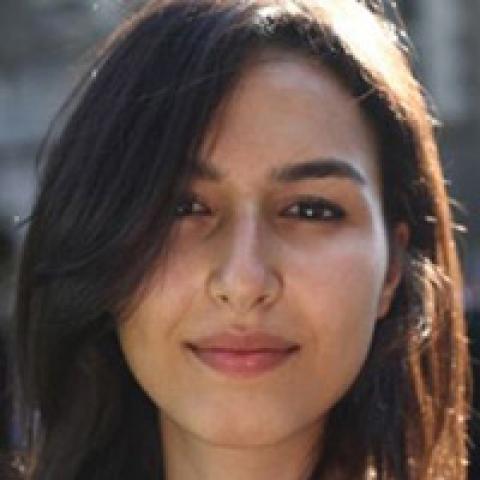

When Suleika Jaouad, a 24-year-old writer, found out she would need a bone marrow transplant to cure her cancer, doctors told her that her mixed ethnicity — Tunisian and Swiss — could make it difficult to find an unrelated donor. Fortunately, Jaouad’s brother turned out to be a perfect match. But for the roughly 40% of Arab patients who cannot find a match in their own family, the odds of finding an unrelated match are not in their favor.
It can be hard for Arab cancer patients to find a genetically compatible donor — and even harder for interracial Arabs like Jaouad — on international bone marrow registries, since Arabs make up only a tiny portion of registered donors. In fact, the only extensive unrelated Arab bone marrow registry is located in the Arab world’s least favorite country — Israel.
Dr. Amal Bishara, an Israeli Arab, launched the Hadassah Medical Center's Arab bone marrow registry in 2008 in Jerusalem. Through more than 90 awareness campaigns and bone marrow drives in Israel and the West Bank, she has succeeded in enrolling 23,094 Arab donors, some 4,000 of whom are currently being evaluated for their human leukocyte antigen (HLA), the tissue that determines the degree of match between a bone marrow recipient and donor. So far, the Hadassah registry has matched 105 Arab donors with Arab and non-Arab patients in Israel and abroad. 22 of these matched donors went through with the process, donating their bone marrow or peripheral blood stem cells to local and international Arabs, and also to non-Arabs.
“The response of the local Arab community was more than expected, and [the] only limitation for continuous donor recruitment is shortage of funding; the cost of HLA typing of each recruited donor is $50,” said Bishara. “Most of the matched donors were cooperative and were willing to proceed with further testing and donation.”


