



Israel’s Liberman tries instigating a secular revolution
The very fact that matters of religion and state became the main issues in the Sept. 17 election could help to resolve them.
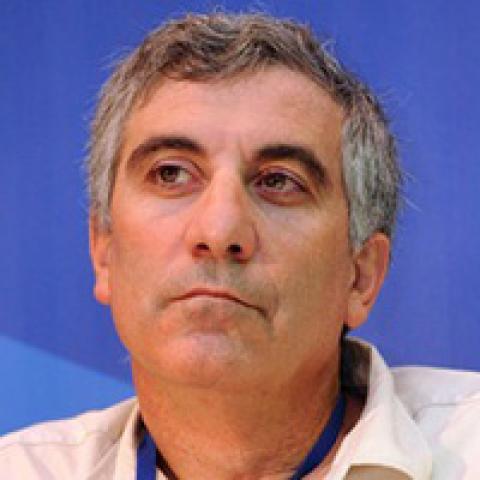

Yisrael Beitenu Chairman Avigdor Liberman was the reason that Prime Minister Benjamin Netanyahu failed to form a right-wing government after last April’s election. He refused to join a coalition with the ultra-Orthodox parties after they refused to move ahead with the version of the Conscription Law, which passed a first reading in the Knesset in July 2018. Liberman may be an inseparable part of the Israeli right, but once again, after September’s election, it is Liberman’s firm views on issues of religion and state that are preventing Netanyahu from forming a new right-wing coalition with the ultra-Orthodox.
Indeed, at the heart of Liberman’s disagreement with the ultra-Orthodox is the Conscription Law. When a committee at the Ministry of Defense first wrote it, it received the approval, if only in principle, of the country’s ultra-Orthodox politicians. But then, when it was on its way to final approval in the Knesset, those same politicians took a tougher stance and demanded that changes be made to the law. The law stipulated that a certain number of ultra-Orthodox men would be required to serve in the military, based on the needs of the Israel Defense Forces (IDF), and that failure by the yeshivas to meet those numbers would result in budgetary sanctions against them. In coalition negotiations after last April’s election, Liberman insisted that the law be passed as is, without changing a single comma, while the ultra-Orthodox parties insisted on a number of changes. The ensuing deadlock prevented a new government from being formed and led to the decision to dissolve the 21st Knesset and call new elections.
In his campaign for the 22nd Knesset, Liberman decided to focus on issues of religion and state and laid out his conditions for bringing his party into a new government. These included passage of the Conscription Law “as written,” the introduction of a compulsory core curriculum for ultra-Orthodox schools, repeal of the so-called "supermarket law," public transportation on the Sabbath, civil marriage and more. Since he believes that it will be impossible to reach any agreement with the ultra-Orthodox over these issues, his one rigid demand, which he repeated throughout the election, was that the two main parties, the Likud party and the Blue and White Party, form a liberal unity government together with Yisrael Beitenu. In other words, he called for the creation of a secular government without the ultra-Orthodox parties, but also without the religious Zionist parties, which he refers to as “messianist.”
So far, the two major parties have disappointed Liberman by moving away from his demands. Likud signed an agreement to form what Liberman calls the “Halacha" (Jewish law) bloc with the ultra-Orthodox parties, which support a government headed by Netanyahu. As for Blue and White, Liberman claims that they are still trying to keep the option of forming a government with the ultra-Orthodox open. As a result of this, he announced on Sept. 22 that he will not be recommending any candidate to President Reuven Rivlin. On the other hand, he did agree to meet with Blue and White Chairman Benny Gantz on Monday. This meeting took place just before a meeting of Netanyahu, Rivlin and Gantz on Monday afternoon.


