



Assad critic seizes chairmanship of key Iran parliament commission
Far from a game of musical chairs, the shift in the leadership of the Iranian parliament’s national security and foreign policy commission is set to alter the stances of the body.
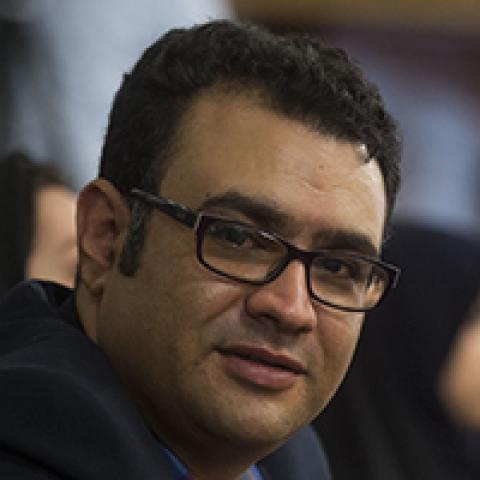

After 14 years, the Iranian parliament’s national security and foreign policy commission has a new chairman. Heshmatollah Falahatpisheh will replace Alaeddin Boroujerdi, who has headed the commission since 2005. Although both men are conservatives, they differ greatly in the policies they have adopted in the past. They also diverge in terms of the support they have derived from parliamentary factions. As such, the leadership shift is viewed by observers as much more than simply a game of musical chairs. Indeed, a commission headed by Falahatpisheh will likely experience very different days ahead.
Internal elections for the specialized commissions of Iran’s parliament are held once a year. In this year’s vote, Boroujerdi saw members of parliament such as Mojtaba Zonour and Javad Karimi-Ghodousi, who are opposed to the Rouhani administration, support his bid to remain as commission chairman. Meanwhile, his opponent, Falahatpisheh, won the post with the backing of the Reformists, the conservatives’ main rival. Reformist member of parliament Alireza Rahimi, who is a member of the national security and foreign policy commission, issued a statement following the chairmanship vote to stress that Falahatpisheh’s victory had been the result of Reformist support, adding that Reformist Mostafa Kavakebian, a fellow member of the national security and foreign policy commission, had even stepped down in favor of Falahatpisheh.
Thus, the expectation is that the new conservative chair of the commission will return the favor through the policies he will advocate. Of course, if Falahatpisheh’s policies were not already closer to those of the Reformists, they would not have preferred him over Boroujerdi to begin with. All these factors indicate that in the year ahead, the management of this commission will be more Reformist-oriented than in the past 14 years. This is especially the case since the speaker of the commission is now also a Reformist, after conservative Hossein Naghavi-Hosseini, a prominent opponent of the Rouhani administration, lost his post to member of parliament Ali Najafi Khoshrodi.
But why did Rouhani opponents back Boroujerdi while government supporters support Falahatpisheh? This is the key question that highlights the difference between these two conservatives.


