



Lebanon concerned about spillover from US-led airstrikes on IS
During the Paris Conference, the Lebanese delegation expressed its concerns that the US-led airstrikes on the Islamic State in Iraq and Syria will have repercussions for Lebanon — concerns that foreign ministers tried to alleviate.
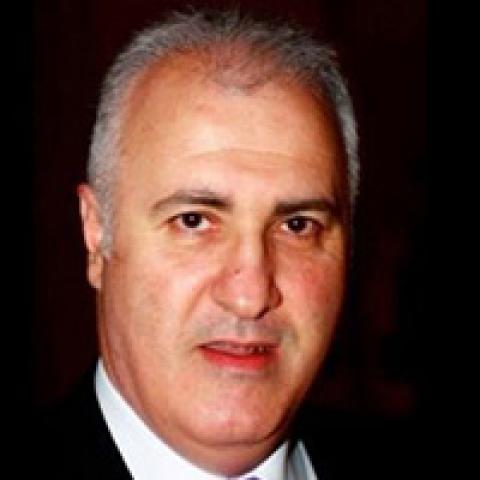

The Lebanese delegation carried its concerns about the US-led airstrikes on the Islamic State (IS) to the Paris Conference on Sept. 15-16. A source participating in the conference told Al-Monitor on condition of anonymity that the negotiations between Lebanese Foreign Minister Gebran Bassil and his Western counterparts were candid and open, since Lebanon is primarily concerned with the war on terrorism and because IS has become a threat that jeopardizes the Lebanese state and people.
However, the Lebanese capacities in this regard are limited and modest. The concerns are serious, and there is fear that any strike against IS in Iraq might send more terrorists to Lebanon. The source told Al-Monitor that US Secretary of State John Kerry, who's primarily involved in the Paris Conference and whose country is spearheading the offense against IS, showed complete understanding for the Lebanese point of view. He even asked about the details and voiced his interest in helping.
As a result, Kerry and Bassil agreed on several points:
- Lebanon is not required to make any contribution to the proposed project of airstrikes against IS. It's not supposed to offer money, men, weapons or logistical facilities for the attacking forces. The international community realizes that Lebanon cannot be burdened by this action.
- Lebanon’s moral support in the international alliance against IS is important and necessary. There is insistence on its participation, even if it is just a participation in form. This is what pushed Kerry to urge his Lebanese counterpart to attend and participate in the UN Security Council’s session that started Sept. 22 to discuss the IS war project.
- The United States and the West should persistently support the Lebanese army. This has become a more pressing need with the airstrikes on IS, in light of the aforementioned Lebanese concerns.
According to the Lebanese source at the conference, Kerry seemed incapable of directly reassuring the Lebanese. He did not have clear answers about whether the US-led airstrikes on IS would eradicate the organization completely from Syria and Iraq, or would only partially hit it to the west of Baghdad and push it to move west toward Syria. He could not say whether the US-led operation might stray and attempt to topple the Syrian regime. This would wreak havoc on Syria, and Lebanon is worried that the chaos might spill over to its territory and its border with Israel, thus blowing up the situation in the entire region.


