



Turkish judiciary bulwark against authoritarian tilt
The Turkish judiciary emerges as a block on a trend toward more centralized power by Prime Minister Erdogan.
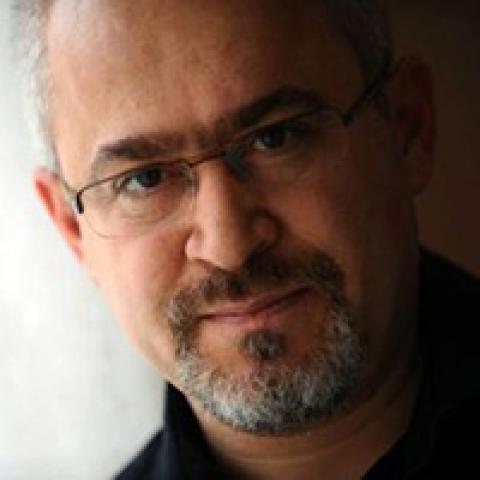

As expected, on July 1 Turkish Prime Minister Recep Tayyip Erdogan formally announced his bid to become Turkey’s first popularly elected president. We already know that if elected, Erdogan is unlikely to follow the “balanced” profile of outgoing President Abdullah Gul.
Following the Sept. 12, 1980, coup, the military, assuming that the president would always be one of its own, equipped the head of state — “if need be” — with constitutional powers pushing the limits of the parliamentary system. Under Turkey’s constitution, the president has a wide range of powers such as appointing the chief of general staff, chairing the Council of Ministers and even calling parliamentary elections. Gul as well as his predecessors used those powers only symbolically, leaving all critical decisions to the government and the prime minister. A low presidential profile is actually what Turkey’s parliamentary system requires. Under the current constitutional system in Turkey, the president is considered to be neutral and not a member of a political party.
In the coming period, however, all those balances are clearly bound to change, if Erdogan wins the August vote. On many occasions, Erdogan has declared he will fully use all presidential powers if elected. Unlike previous presidents who were elected by parliament, the next one will be elected directly by popular vote, which will help Erdogan play the role he envisages for himself. Thus, for Turkey, Erdogan’s victory will very likely mean a shift to a de facto semi-presidential regime bringing the president to the foreground.
Given Erdogan’s absolute control of his Justice and Development Party (AKP) and cabinet, his election would further mean that an over-empowered president would be effectively acting also as a prime minister and chairman of the ruling party at the same time. According to the Yeni Safak daily, which is close to the government, Erdogan, speaking at a meeting of AKP provincial chairmen a few days before he announced his candidacy, warned, “I remain here as your leader. You won’t be looking for a new one.” His remarks indicate he is seeking to block any search for a new leader within the party.


