



Lebanese Expert: Constitutional Council Must Be Restructured
Speaking to Al-Monitor, Mahfouz Skina, a former adviser to Lebanon’s State Council, comments on the country’s political crisis and says the Constitutional Council must be restructured.
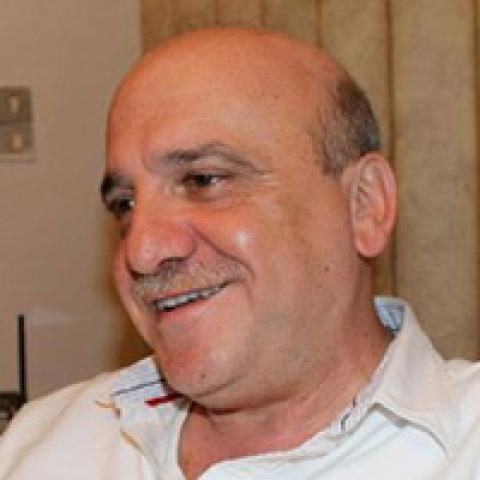

Over the last two years, Mahfouz Skina, who holds a doctorate in public law from the French University of Poitiers and is the former adviser to the State Council in Lebanon, has conducted several studies tackling constitutional problems in Lebanon. In the midst of the prevailing sectarian political bickering in the country, these studies are important because they highlight the need for a fruitful public, national and multi-partisan debate. This debate should contribute to the consecration of the state-building process, rather than leading to the dismantling of the state and the paralysis of its institutions, as is the case today.
The constitutional crisis hitting Lebanon today because of political divisions has disrupted the work of the Constitutional Council. This crisis has prevented the council from rendering a decision regarding the appeal filed by President Michel Suleiman, calling for the invalidation of the 17-month extension of parliament’s legal term. In light of this, Al-Monitor spoke with Skina to find out more about his vision on the nature of the Constitutional Council crisis, his views on how to get out of the crisis and its impact on the overall democratic system in Lebanon.
First, Skina confirmed that the Constitutional Council is one of the most important achievements brought about by the Taif Agreement, which laid the foundations for establishing the Second Republic in Lebanon after 20 years of civil war. The law establishing the Constitutional Council conferred to it important and essential powers, similar to those of any constitutional council in democratic countries, in particular the Constitutional Council in France.
Skina believes that the problem faced by the Constitutional Council today is the method it has maintained for selecting its members, half of which are named by the parliament and the other half by the Council of Ministers. This is done in accordance with the applicable sectarian distribution in Lebanon, and requires the council to include five Christian and five Muslim members.


