



Parliament Speaker Key to Lebanese Electoral Law
Lebanese Speaker Nabih Berri remains a critical player in Lebanese politics, including whether there will be passage of an electoral law, writes Elie Hajj.
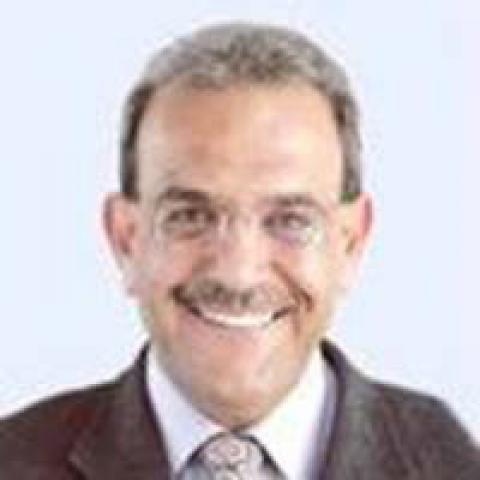

One man alone plays the strings of the Lebanese political fiddle, his friendship equally sought by all parties. He has held the second-most powerful position in the state for 21 consecutive years. A young Lebanese woman tweeted recently that she had concluded her university studies, watched six soccer World Cups, witnessed the election of four presidents and three popes, but known only one Speaker of parliament — Nabih Berri, the head of the Hezbollah-allied Shiite Amal Movement. This is a man whose role grows exponentially every time solutions or compromise are required.
Proposed solutions for Lebanon's multitude of complex problems have all found their way to Berri, the wizard of Lebanon’s political Oz. The first urgent matter, which led to the resignation of Prime Minister Najib Mikati, pertains to the retirement of Maj. Gen. Ashraf Rifi, director general of the Internal Security Forces. This issue arose at a time when Mikati had wanted to extend his stay in office, due to his extensive experience and the delicate security situation that the country is experiencing, in addition to factors relating to the outgoing prime minister’s desire to gain the favor of his (Sunni) community.
At the other end of the spectrum, and as a result of pressure from Gen. Michel Aoun, the Hezbollah-led March 8 coalition categorically refused to extend the tenure of retiring officers, including Rifi, the head of Military Intelligence, the army’s commander and others. The solution proposed by some parliamentary blocs, with tacit cooperation from Berri, was to submit a petition in this regard bearing the names of 69 of the 128 members of parliament (MP), representing more than 51% of all deputies. Berri would thus allow deliberation and approval of a solution to one of the major problems standing in the way of finding solutions to even more important ones, namely, the formation of a new cabinet. This would be followed by the adoption of a new electoral law and an understanding reached on the conduct of the elections themselves, subsequent to a few-months' extension of parliament’s term on technical grounds. A new cabinet would be formed in parallel, and who knows, the basket of agreements might also include the election of a new president in the first half of 2014.
These problems, at least in theory, could be easily overcome by the shrewd Berri, always quick witted and humorous, and who rarely loses his temper or his ability to deal with developing situations. Through contacts with politically opposing deputies who met with Berri separately over two days, Al-Monitor learned that the Speaker has promised MP Walid Jumblat’s bloc, the National Struggle Front, and former prime minister Saad Hariri’s bloc, the Future Movement, that he will not put the Orthodox Gathering electoral draft law to a vote if deputies representing important components of Lebanese society are absent, meaning the Sunnis and the Druze. The said law stipulates that the members of each religious sect elect their own representatives on a proportional representation basis, with the whole of Lebanon serving as one electoral district.


