



How China benefits from Trump's Iran deal


Hi readers,
The 14-point memorandum of understanding signed between Iran and the United States is a windfall for China. Beijing's bet on the survival of the Iranian regime paid off, and now it stands to benefit from an emboldened leadership in Tehran, economic opportunities inside Iran and a broader erosion of regional confidence in Washington’s credibility.
It is no coincidence that on the eve of the deal’s signing, Iranian negotiator and parliament speaker Mohammad Bagher Ghalibaf pledged doubling down on Tehran’s partnership with China.
Let’s unpack,

Leading this week
It is no exaggeration to say that every provision of the 14-point deal favors China. Beijing, which had stayed on the sidelines during the nearly four-month war, stands to benefit from a politically strengthened regime and significant financial relief for Tehran. Here is why:
1- Let’s start with the basics. War termination is good news for Beijing and stabilizes energy flows: Ending hostilities, especially around maritime routes, reduces disruption risk to oil shipments that China depends on, particularly via the Strait of Hormuz.
The strait accounts for roughly 45% to 50% of China’s imported crude oil, according to data from Guancha.
2- The “definitive, mutually agreed plan with at least $300 billion for the reconstruction and economic development of the Islamic Republic of Iran” plays into China’s strength. Should sanctions be lifted, reconstruction could hinge on Chinese contractors, particularly if the US and other Western countries remain hesitant to invest capital too soon.
3- Oil waivers and the release of frozen assets stand to benefit China. Formal waivers increase Iranian crude availability, likely reinforcing discounted pricing structures favorable to Chinese refiners.
China, according to the Wall Street Journal, holds the largest share of Iran’s frozen assets estimated between $20 billion to $50 billion according to The Wall Street Journal. It would give Beijing leverage in how and when Iran can access those funds.


Before the conflict, Chinese buyers accounted for an estimated 80% to 90% of Iranian oil sales, with much of the trade routed through a shadow fleet of tankers and ending up in small, private Chinese refineries. Many such refineries have been sanctioned by the US.
Sanctions relief would reduce Beijing’s exposure and allow Chinese state energy firms, banks and insurers to enter Iran more openly. Such a shift could see Beijing leaning further into Iran’s oil market, potentially negotiating long-term contracts and investing in Iran’s oil infrastructure — which has long been in need of modernization — rather than relying on high-risk purchases.
Iranian officials know that Chinese investment in Iran has so far been constrained. On Wednesday, Ferial Mostofi, vice chairman of the Tehran Chamber of Commerce, Industries, Mines and Agriculture, said that the Chinese have not made “effective investments in the country.” "It is necessary to provide the necessary grounds for the entry of real Chinese investments in Iran by removing some obstacles," said Mostofi.
For more insight into the US-Iran deal, sign up here for AL-MONITOR’s upcoming webinar on Tuesday.
4- Nuclear constraints on Iran, endorsed by the Security Council, align with long-standing Chinese objectives that oppose a nuclear-armed Iran. A capped Iranian nuclear program lowers the likelihood of future conflict that could threaten Chinese assets and supply chains.
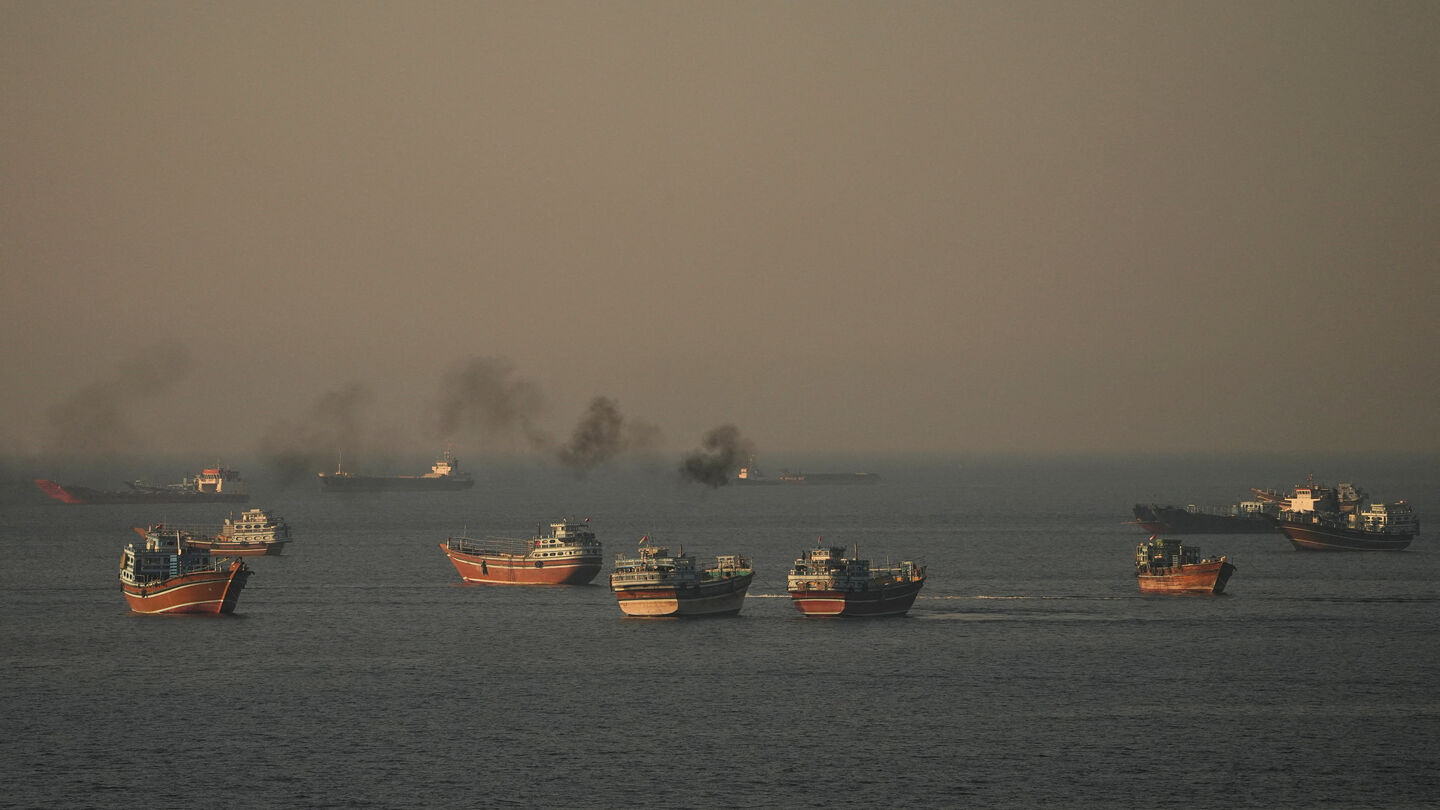
Vessels at the Strait of Hormuz, as seen from Musandam, Oman, June 15, 2026. REUTERS/Stringer
5- The 60-day period for negotiations with no charge to pass through the Strait of Hormuz is an opportunity for China. It allows China to position itself economically while Washington remains tied up in diplomacy.
Our take: The Iranian leadership is already signaling where this is heading. Ghalibaf has framed China not just as a trading partner but as a central pillar of emerging geopolitical blocs, with economic cooperation at the core.
The timing is telling. As Tehran reenters negotiations with Washington, it is simultaneously inviting a deeper Chinese role in post-war Iran. Add to that, the war has shaken Arab Gulf confidence in the United States and created a rift between the US and Israel. China is not offering to be a substitute, but it can certainly capitalize on these cracks to expand its footprint and steady rise in the region.

Photo of the week
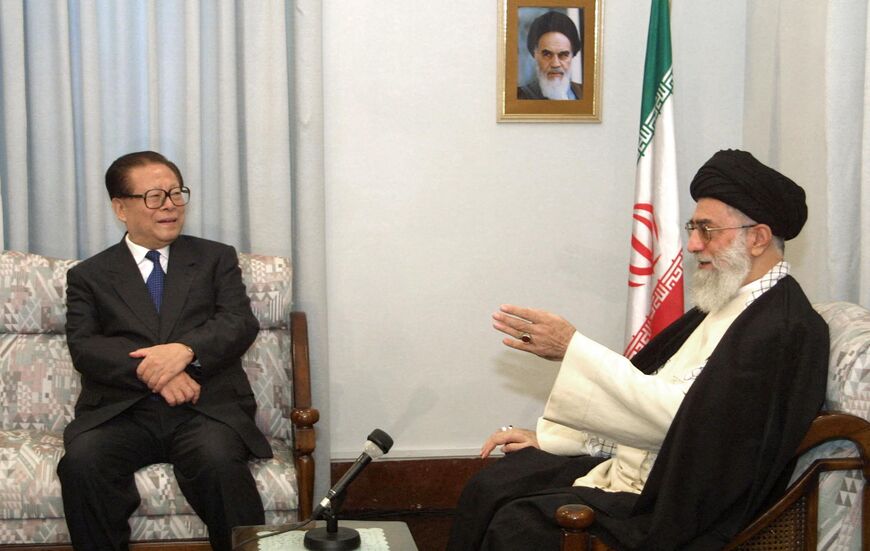
Late Iranian Supreme Leader Ayatollah Ali Khamenei meets with Chinese President Jiang Zemin in Tehran, on April 21, 2002. AFP PHOTO/Atta Kenare
Deals and visits ✈️
- China to send humanitarian assistance to Lebanon, Iran
- Saudi Arabia sets goal to develop 100,000 housing units with Chinese companies by 2030
- China welcomes US-Iran deal
- Saudi Arabia awards $507 million in housing projects to Chinese firms
- China's Middle East envoy meets with Omani foreign minister
- Morocco hosts China-Africa Economic and Trade Expo
- Sudan's ministry of foreign affairs hosts Chinese envoy
- Morocco reviews potential free trade agreement with China

What we are reading
- Notes on Egypt: ChinaTalk
- The long shadow of the Iran war: Foreign Affairs
- China tees up digital payments system to compete with dollar: Financial Times
This one's on us.
The story doesn't end here.
Our correspondents are already on the next chapter. Read everything they file, from $2/week.
See Offers